Texas Investigates Islamic Tribunal’s Legal Authority
Updated October 21, 2026 | By SyndicatedNews — SNN.BZ
Texas officials have requested investigations into whether organizations describing themselves as Islamic tribunals have misrepresented their authority under state law. The scrutiny includes a Dallas-based organization called Islamic Tribunal. The existence of an investigation does not establish that the organization violated the law.
On November 19, 2025, Governor Greg Abbott called on Texas law-enforcement authorities to investigate allegations that some religious bodies were presenting themselves as courts with power to issue binding rulings. His letter to state and local officials raised concerns about possible misrepresentation of legal authority.
On April 6, 2026, Attorney General Ken Paxton announced a demand for documents from Islamic Tribunal. Paxton’s office alleged that the group had described its decisions as final judgments approved by the Texas judicial system. The document demand was an investigative step, not a judicial determination that those allegations were true.
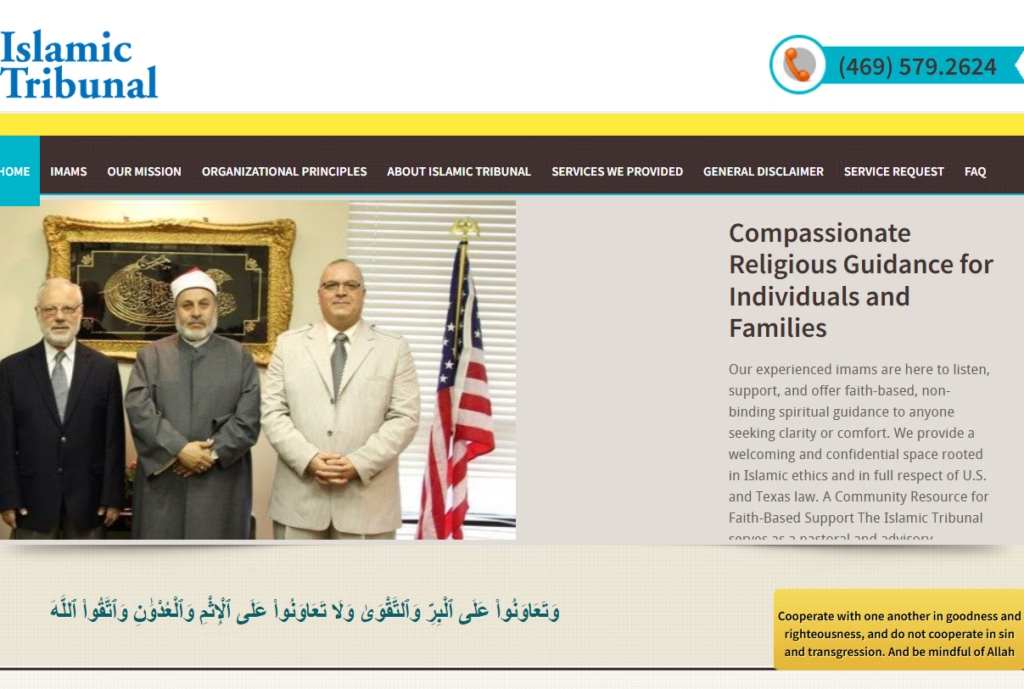
The organization has described its services as voluntary religious guidance, mediation, and counseling rather than a replacement for civil courts. Its position can be reviewed at its website. The competing descriptions make the actual language of its agreements, representations to participants, and procedures important questions for investigators.
The First Amendment protects religious practice, and religious mediation is not inherently unlawful. At the same time, private religious bodies cannot confer governmental judicial authority on themselves or displace applicable state and federal law. Whether any particular activity crosses that line depends on its conduct and the governing law.
One concern raised by debates over religious arbitration is whether participants, especially those in family disputes, understand that they may retain rights and remedies under civil law. Allegations of pressure or unequal treatment require evidence from particular cases; this article does not establish that the Dallas organization coerced any named participant.
Another issue is how tribunals describe decisions about marriage, divorce, property, or other disputes. A religious opinion is not automatically a state-court order. Civil courts apply relevant laws and safeguards when deciding whether private agreements are enforceable, including rules concerning consent and public policy.
Claims that Islamic Tribunal teaches children to hate the United States, encourages violence, or is responsible for unrest abroad were not substantiated by the public records reviewed for this update. Those claims are therefore not presented as facts. The investigations described here concern alleged representations about legal authority, and should not be confused with findings of extremism or criminal guilt.
The key outstanding questions are whether the tribunal made misleading claims of official judicial authority, whether participants were informed of their civil-law rights, and what evidence Texas investigators ultimately obtain. SNN.BZ will update this report if public records establish further findings, charges, court rulings, or an official closure of the inquiry.