Disaster Relief Depends on More Than Supplies—It Depends on Cooperation
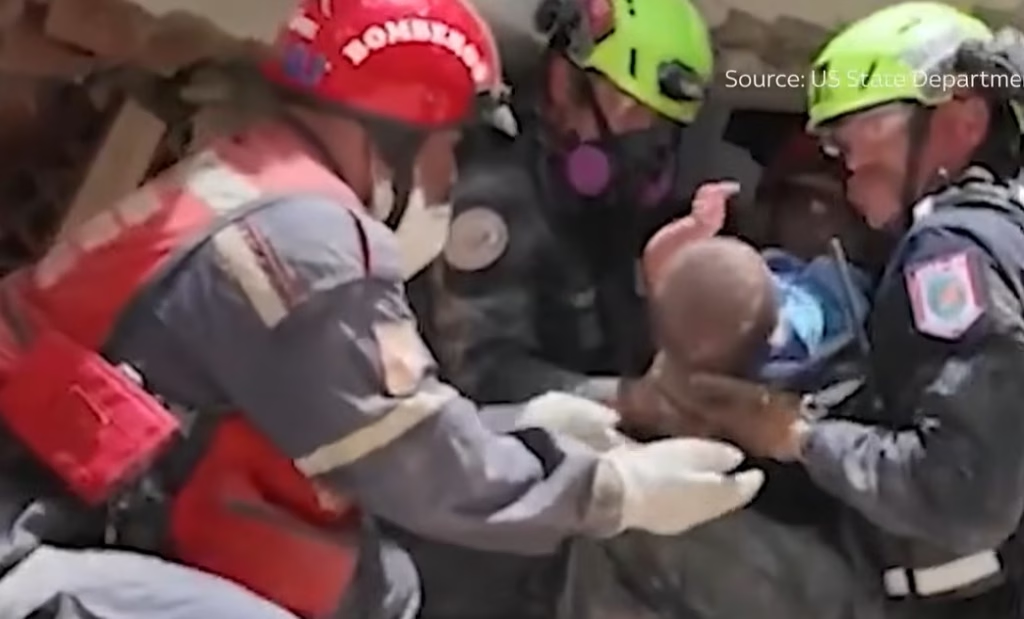
INFANT RESCUED FROM RUBBLE
In the aftermath of a major earthquake, the speed and effectiveness of humanitarian aid depend on coordination as much as on the availability of food, medicine, and rescue equipment. When a country is experiencing political instability or competing centers of authority, relief operations can become significantly more difficult.
By SyndicatedNews | SNN.BZ
Caracas, Venezuela – Emergency response requires cooperation among national officials, regional governments, emergency services, humanitarian organizations, and local communities. If responsibilities are unclear, if officials disagree over authority, or if administrative decisions are delayed, critical supplies may take longer to reach survivors.
Humanitarian organizations have extensive experience working in these environments. Their goal is to deliver assistance based on need while remaining as neutral and independent as possible. International relief efforts often involve multiple partners to reduce bottlenecks and improve access to affected communities.
People who wish to support earthquake survivors can make the greatest impact by donating through established humanitarian organizations with transparent financial oversight and experience operating in disaster zones. These organizations typically have logistics networks, trained personnel, and accountability measures that help ensure assistance reaches affected communities.
By contrast, sending money through personal payment platforms such as Venmo or Zelle is generally not recommended for international disaster relief. These services are intended primarily for transfers between individuals and may offer limited safeguards against fraud or misuse in large-scale humanitarian emergencies. Crowdfunding campaigns can be helpful in some cases, but donors should verify that campaigns are connected to reputable organizations or verified local partners before contributing.
Recovery from a catastrophic earthquake is measured not only by the number of lives saved in the first days but also by the restoration of hospitals, clean water, sanitation, housing, transportation, schools, and livelihoods in the weeks and months that follow. The more effectively governments, humanitarian organizations, and local communities cooperate, the more quickly affected families can begin to rebuild their lives.
If someone needs to contact the International Committee of the Red Cross in Venezuela for humanitarian assistance or family-link services, the ICRC lists these community contact numbers:
- +58 424 172 1364
- +58 412 636 5015