Senators Condemn Bankman-Fried After Accepting His Political Donations
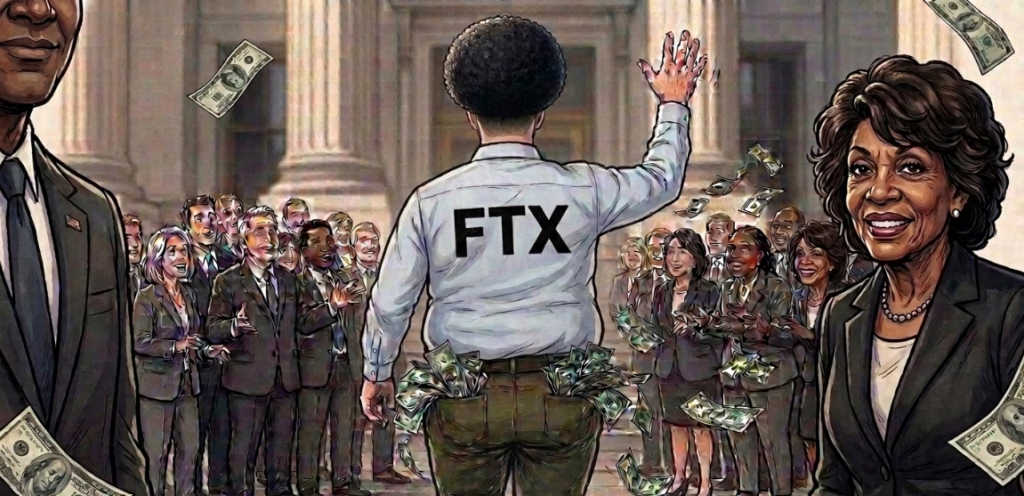
The very senators that accepted Sam Bankman-Fried's FTX cash also voted for him never to be pardoned.
There is an irony that many Americans find impossible to ignore.
By SyndicatedNews | SNN.BZ
The same Senate now unanimously declaring that Sam Bankman-Fried should never receive a pardon operates within a political system that enthusiastically accepted campaign contributions by Bankman-Fried and the FTX empire during its meteoric rise.
Before FTX collapsed, Bankman-Fried was celebrated throughout Washington. He was invited to conferences, sought after by policymakers, praised by political insiders, and became one of the largest political donors in the United States. Millions of dollars flowed into campaigns, political committees, advocacy organizations, and political causes. While the majority of his publicly disclosed contributions went to Democratic candidates and organizations, contributions connected to FTX executives and affiliated political networks reached both sides of the political aisle.
No evidence suggests that lawmakers who accepted lawful campaign contributions committed crimes merely by receiving those donations. However, that reality has done little to quiet public skepticism.
Many Americans are asking a straightforward question: If Bankman-Fried was viewed as a financial genius worthy of political access when the money was flowing, why did so few public officials raise concerns until after the empire collapsed?
When campaign checks were arriving, Washington’s doors appeared wide open.
When the bankruptcy filings arrived, those same doors suddenly slammed shut.
For victims who lost savings, retirement funds, businesses, and financial security, the timing is difficult to ignore.
The Senate’s opposition to a pardon may be justified. The courts have spoken, a jury rendered its verdict, and Bankman-Fried is serving a lengthy federal sentence. Yet many Americans believe accountability should not end with one man.
They want transparency regarding who received political contributions connected to the FTX empire, who returned those funds, who kept them, and whether political influence helped create an environment where warning signs were overlooked.
The question is not whether senators committed crimes by accepting legal donations. The question is whether Washington’s outrage appeared only after the money stopped flowing.
That is the Senate’s convenient memory problem—and it is one the public is unlikely to forget anytime soon.