Sussexes’ Quasi-Royal Mirage: Harry & Meghan’s Australian Flop
AUSSIE TOUR FAIL
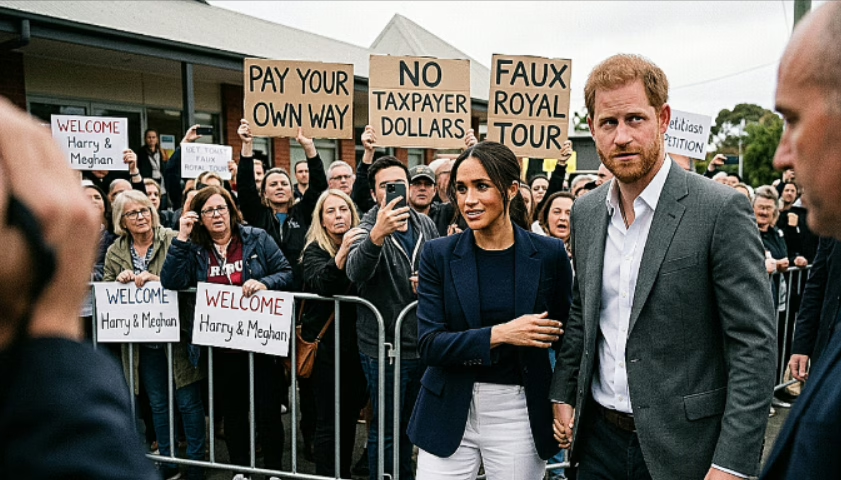
Prince Harry and Meghan Markle touched down in Australia this week for a four-day whirlwind visit spanning Melbourne, Canberra, and Sydney. It has been widely labeled a “quasi-royal tour” by media outlets and observers alike—complete with hospital visits to sick children, stops at veterans’ memorials, meetings with the homeless, and a university engagement.
By SyndicatedNews Mental Health Expert | SNN.BZ
Yet this is no official state visit. The couple are private citizens, no longer working royals since their 2020 Megxit. The trip blends charitable appearances with paid commercial gigs, including Harry’s keynote at the InterEdge Summit (or similar Melbourne conference on mental health and workplace issues) and Meghan’s appearance at a high-ticket women’s retreat in Sydney.
Reports confirm Harry is being paid around $50,000 (roughly £36,000) for his speaking slot—a sharp drop from the seven-figure fees he once commanded. Tickets, initially priced at over $2,000 AUD equivalent, have been slashed by 50% amid weak demand, with organizers scrambling to fill seats. Empty chairs and discounted rates tell the story: what was billed as a major draw has underwhelmed, echoing earlier flops like his Canadian conference that also failed to sell out. Meghan’s parallel event reportedly charges up to $3,000 per ticket for a “Besties” style retreat, with additional VIP packages for photos.
This isn’t new. The couple have leaned hard into royal-adjacent branding since stepping back from official duties. They retain their Duke and Duchess of Sussex titles and Harry’s “Prince” prefix (though they no longer use “His and Her Royal Highness” in official UK contexts). Their itinerary mimics past royal tours: polished photo-ops, solemn wreath-layings, and carefully curated “meet-and-greets.” Meghan has even instructed well-wishers to “call me Meg” while still operating under the full Sussex brand. Critics in Australia have called it “disrespectful” and accused the pair of treating the country “like an ATM” for self-promotion and income generation.
The Core Problem: Pretend Authority Without the Credentials or the Crown
The fundamental issue is simple: Harry Mountbatten-Windsor and Meghan Markle are behaving as though they remain “His and Her Royal Highnesses” with the institutional weight, public service mandate, and unassailable platform that title once conferred. They are not.
- No longer working royals. Since January 2020, they have had no official duties, no taxpayer funding, and no constitutional role representing the Crown or the UK. Their visits are privately funded and lack the diplomatic or governmental backing of true royal tours. Blending charity with paid appearances creates the optics of a “faux royal tour” that muddies the waters for the actual monarchy.
- Unqualified to dispense paid advice on workplace behavior and psychology. Neither holds licenses, degrees, or professional certifications in psychology, counseling, human resources, or organizational behavior. Harry attended Eton, served in the British Army (where he completed a short counseling course for veterans in 2017), and has spoken openly about his own mental health struggles. Meghan’s background is in acting and lifestyle blogging. Yet Harry is paid to keynote on “workplace mental health,” “service,” and resilience—topics that demand clinical expertise or proven professional experience in corporate settings. He has never held a conventional 9-to-5 job outside the military or royal patronage roles. Critics rightly point out the hypocrisy: lecturing on workplace struggles while lacking formal training or lived experience in the environments he addresses.
They charge premium rates precisely because of the lingering royal cachet. But as ticket sales and fee collapses demonstrate, that luster has faded. Public curiosity has given way to skepticism: Why pay top dollar for advice from two people whose primary “qualification” is a title they no longer fully embody in an official capacity?
The result is a self-reinforcing cycle of declining relevance. Low turnout breeds more negative headlines, which further erodes their market value—exactly the “brutal reality check” playing out in Melbourne right now.
A Practical Solution: Drop the Pretence and Build Genuine Expertise
Harry and Meghan don’t need to disappear or abandon their causes. They have real platforms—Invictus Games for Harry, Archewell for both—and personal stories that resonate. But continuing the quasi-royal cosplay while monetizing unqualified advice is unsustainable and increasingly embarrassing.
The fix is straightforward:
- Embrace private-citizen reality fully. Stop staging tours that imitate royal itineraries. Focus engagements on areas of authentic strength (veterans’ issues, personal mental health advocacy) without the royal pomp or implication of official endorsement.
- Get properly qualified if they want to advise professionally. If workplace psychology and mental health are their lane, invest the time and money in formal credentials—certifications, degrees, or supervised clinical training. Harry’s BetterUp role (as Chief Impact Officer) is a start, but it reads more like a brand ambassador gig than professional practice. Genuine expertise would silence critics and justify fees.
- Pivot to proven strengths without the royal markup. Lean into entertainment, production (their Netflix/Spotify track record, however mixed), writing, or hands-on philanthropy. Charge market rates based on delivery, not faded titles. Lower barriers to entry—more accessible events, free or low-cost initiatives—could rebuild goodwill and actual influence.
- Transparency over optics. Publicly acknowledge their non-royal status and the limits of their expertise. Frame appearances as personal perspectives, not expert guidance. This honesty would do more for their brand longevity than any staged photo-op.
Australia was supposed to be a comeback stage. Instead, it’s become a mirror. The empty seats, slashed prices, and public eye-rolling aren’t about one bad event—they’re the market’s verdict on a business model built on borrowed royal glory rather than earned substance. Harry and Meghan have talent, privilege, and a global stage most people can only dream of. The question is whether they’ll keep pretending to be what they no longer are—or finally build something real on their own terms. The clock is ticking, and the seats are staying empty.