CHANGE.ORG SUSSEX PETITION

AUSTRALIANS SAY "LET THE SUSSEX PAIR PAY THEIR OWN WAY"
Australian Petition Asks That Harry and Meghan Pay Their Own Way
By Lady Arglwyddes Awbrey | SNN.BZ
Every so often a petition appears that seems trivial at first glance — just another online gripe, a digital moan into the void. But occasionally, a petition taps into something deeper: a growing public frustration that has been simmering quietly beneath the surface. The recent Australian petition calling for taxpayers not to fund security or luxury arrangements for Prince Harry and Meghan Markle during any visit Down Under appears to be exactly that sort of moment.
CHANGE.ORG PETITION TO HAVE THE SUSSEX COUPLE PAY THEIR OWN BILLS
Now, to be clear, this petition is not a national vote. No ballots have been cast. Parliament has not debated it. But that hardly means it’s irrelevant. Petitions — especially in the modern social-media age — can act as a pressure gauge for public sentiment. They reveal what people are whispering at dinner tables and posting anonymously online long before politicians dare say it aloud.
And in this case, the message from many Australians seems blunt: if Harry and Meghan chose to step away from royal duties, they should also step away from royal privileges funded by the public.
When Prince Harry and Meghan Markle announced in 2020 that they were stepping back from their roles as senior royals, it was presented as a clean break. They would pursue financial independence, build their own careers, and leave behind the formal obligations of royal life. As part of that transition, they were told they could no longer use their “HRH” — His or Her Royal Highness — titles in an official capacity.
Yet the perception persists among critics that the couple want the freedom of private celebrity while still enjoying the prestige and deference that comes with royalty. Stories have circulated for years — some verified, some disputed — about staff being expected to address Meghan as “Your Royal Highness,” despite the agreement that the title would not be used in practice.
That contradiction lies at the heart of the resentment.
You cannot, many argue, simultaneously declare independence from the institution while continuing to trade on the symbols of that institution. The public — particularly taxpayers — tend to notice when someone wants the crown without the duty that comes with it.
Which brings us back to that petition.
Petitions like these rarely change policy overnight. But they can shift the conversation. When enough signatures accumulate, when headlines start repeating the same question — “Why should taxpayers pay for this?” — politicians begin to take notice. Public sentiment evolves not through one dramatic vote but through thousands of smaller signals that slowly change the political weather.
In other words, petitions are less like legislation and more like a barometer.
And right now, the barometer suggests that the patience many once had for Harry and Meghan is wearing thin.
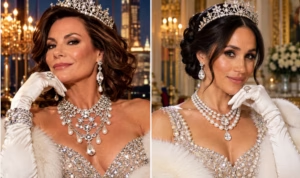
In fact, the whole spectacle increasingly reminds me of a reality-television parallel: Countess Luann de Lesseps from The Real Housewives of New York City.
Luann built an entire persona around her aristocratic title — “The Countess.” The catch? After her divorce from the actual count, the title technically became meaningless. Yet the etiquette lessons, the insistence on being addressed properly, the theatrical attachment to status all continued.
Fans watched with a mixture of fascination and disbelief as someone clung to the symbols of aristocracy long after the substance had faded.
That, critics would argue, is precisely the dynamic people now see with Meghan Markle. The royal branding remains central to the public image even while the formal responsibilities have been abandoned. Titles may technically exist in the background, but the understanding with the monarchy was that they would not be used as working identifiers.
To many observers, that line appears increasingly blurred.
None of this means that Harry and Meghan are unwelcome everywhere, or that every critic speaks for an entire nation. Public opinion is always messy, divided, and evolving. But petitions like the Australian one serve an important role in highlighting the shift.
They remind public figures — royal or otherwise — that sentiment can change. Admiration can turn into skepticism. And goodwill, once spent, is not always easily replenished.
If nothing else, this petition has accomplished one thing already: it has forced a conversation about what it really means to step away from the monarchy.
Because leaving the crown, as history repeatedly shows, is one thing.
Leaving the aura of the crown behind is something else entirely.