Talk to Your Kids — Before Someone Turns Them In
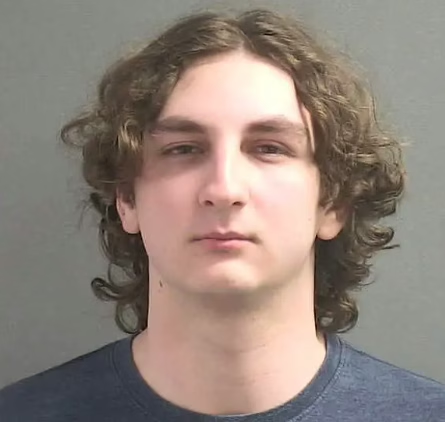
COCKEY, OBNOCIOUX AND ARROGANT - WITH DANGEROUS INTERNET BEHAVIOR
A 19-year-old cocky kid from Edgewater, Florida, thought his Instagram posts were just “jokes.” The FBI and Homeland Security didn’t see it that way.
By SyndicatedNews | SNN.BZ
What started as anonymous online ranting under the handle “Incel Revolution Soon” ended with federal agents at his family’s front door, a felony arrest, and a very public bodycam video that millions have now watched.
Lucas Nevcherlian’s story—captured in raw bodycam footage released in April 2026—is not about one troubled kid. It’s a cautionary tale for every parent raising teenagers in the age of social media, echo chambers, and “edgy” humor that can cross into federal felony territory overnight. If your teen spends hours online, this article is for you.
What Happened to Lucas
On October 18, 2025, the FBI received a tip about an Instagram account posting violent, racially motivated threats. The posts included calls for “total Jewish” action, references to masking women, fantasies of mass murder, and chats with friends about “lighting fuses” like the 2011 Norway attacks or school shootings. Investigators traced the account straight to the Nevcherlian home.
Six days later, an FBI agent and Edgewater police showed up. Lucas, then 19, was home with his mother, brother, and later his father. Bodycam footage shows a cocky, defiant teenager who repeatedly interrupted agents, called their questions “intimidation,” claimed everything was protected “free speech” or “emotional banter,” and told them to “watch your mouth.”
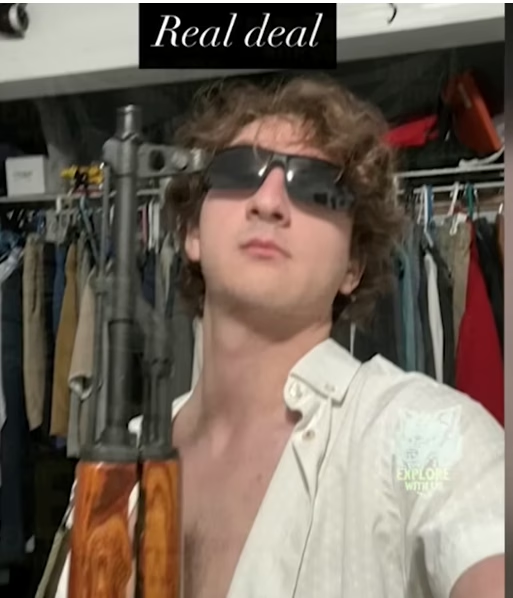
He posed with his father’s AK-style rifle for “funny” photos and admitted knowing incel killer Elliot Rodger. His family mostly downplayed it. His mother kept repeating “watch your mouth, Luke.” His grandmother was the only one who spoke up, saying she no longer felt safe alone in the house with him.
No arrest that day—but the agent left to secure a warrant. On October 30, officers returned at night and took Lucas into custody on charges of written threats to kill or do bodily injury (a second-degree felony in Florida carrying up to 15 years). He posted bond and was released. The case is ongoing, with a pre-trial hearing scheduled for May 20, 2026.
Lucas later complained in a jail call that he was “humiliated” and worried his friends would find out. Friends interviewed by the FBI described him as chronically online, full of rage, but “probably wouldn’t actually do it.”
The Real Warning for Parents
This wasn’t a kid who “snapped.” It was a slow build: isolation at home, hours spent in toxic online communities, no apparent consequences for hateful language, and parents who seemed shocked—yet not entirely surprised—when the FBI arrived. The bodycam video is uncomfortable to watch because it exposes how easily “just joking” can become a federal investigation when those jokes threaten violence.
Here’s what every parent of a teenager needs to understand right now:
1. “It’s just memes” or “free speech” is not a defense. Online posts that incite violence, even if framed as jokes, are not protected by the First Amendment. The FBI and prosecutors treat written threats seriously—especially those involving mass harm, specific groups, or weapons. Lucas learned this the hard way. Your teen could too.
2. You cannot monitor what you refuse to see. Lucas’s family insisted he “never gets in trouble” and “never leaves the house.” That isolation was part of the problem. Teens today live in private digital worlds. If you’re not checking phones, apps, group chats, and search histories regularly—and having honest conversations about what you find—you are flying blind.
3. Cockiness and disrespect at home are red flags, not “teen stuff.” Watch how your teen talks to you, to authority figures, or when challenged. Lucas was smug, argumentative, and dismissive even with federal agents present. That attitude didn’t appear overnight. It was enabled. Parents who normalize “he’s just blowing off steam” or “boys will be boys” are teaching their children that consequences don’t apply to them—until they do.
4. Online radicalization is real and faster than you think. Incel ideology, antisemitic tropes, misogynistic rants, and fantasies of “revolution” spread in closed chats and algorithm-fed feeds. Lucas wasn’t born hating women or talking about obliterating systems—he absorbed it online. Parents must talk openly about these influences. Pretending they don’t exist because “my kid would never” is exactly how families end up on bodycam footage.
5. Guns + rage + isolation = danger. The family kept firearms locked up, yet Lucas accessed one for social-media photos. Even one lapse is too many. If your teen shows signs of anger, withdrawal, or fascination with violence, secure weapons immediately and seek professional help.
What You Should Do Today
- Check devices weekly. Use parental controls, review Instagram, Discord, Snapchat, and private group chats. Don’t snoop secretly—do it openly and explain why.
- Talk about online vs. real life. Make it clear that “jokes” about murder, rape, or targeting groups are not funny and can destroy futures.
- Set real boundaries and enforce them. Screen time limits, device-free family time, and accountability matter more than ever.
- Listen to the quiet voices. In Lucas’s home, the grandmother saw the danger everyone else ignored. Trust your instincts and those of other family members.
- Get help early. If your teen is chronically angry, isolated, or obsessed with extremist content, contact a counselor or hotline before law enforcement knocks.
The Nevcherlian family never expected the FBI at their door. Most parents don’t—until it happens. Lucas’s cocky defiance and the family’s casual dismissal turned “harmless” posts into a felony case that will follow him for years.
Your teenager is watching everything you do—or don’t do—about their online life. Don’t wait for agents to show up before you start paying attention. The internet doesn’t forget, and neither do federal investigators.
Lucas Nevcherlian will be in court on May 20, 2026.