Mangione Pleads Guilty; State Trial Stalls
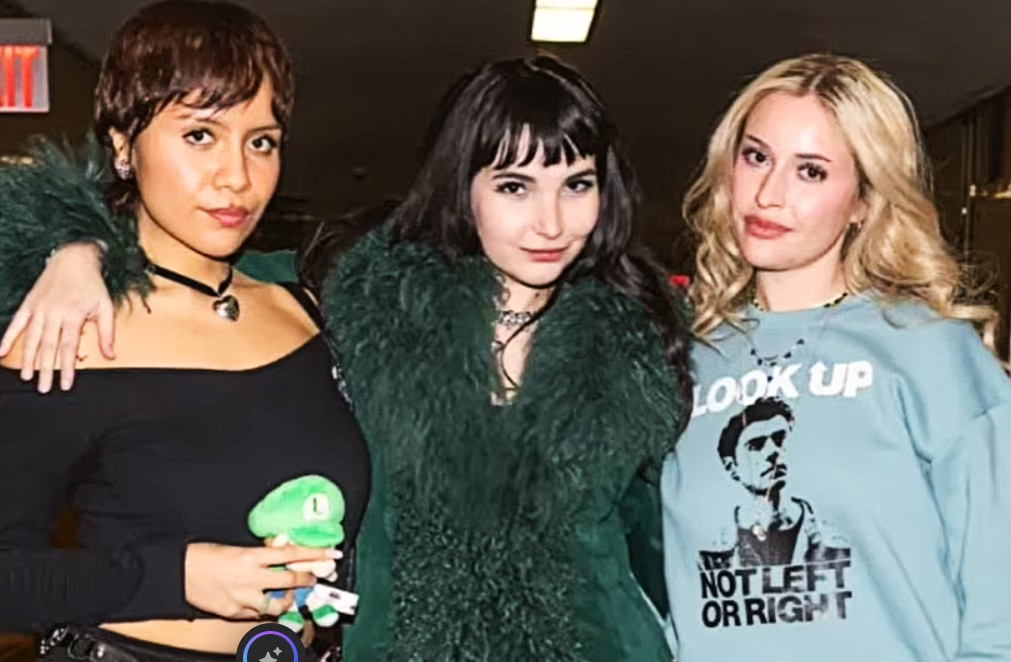
As in the Charlie Mansion case, Luigi Mangione has "groupies"
Federal plea transforms the Brian Thompson murder case
By SyndicatedNews True Crime | SNN.BZ
Luigi Mangione is no longer merely the accused gunman awaiting a federal trial in the killing of UnitedHealthcare CEO Brian Thompson. On August 14, 2026, Mangione pleaded guilty in Manhattan federal court to two stalking charges resulting in death and admitted that he followed Thompson to a UnitedHealth investor conference and shot him outside a Manhattan hotel on December 4, 2024.
The guilty plea dramatically changed a case that had generated extraordinary public attention, fundraising and debate over the American health-insurance system. Federal prosecutors say Mangione admitted the conduct in open court. He is scheduled to be sentenced by U.S. District Judge Margaret Garnett on December 18, 2026, and faces a possible life sentence.
The plea did not automatically end the separate New York state prosecution. Mangione still faces state charges that include second-degree murder, weapons offenses and forgery. But immediately after the federal plea, his lawyers moved to dismiss most of the state case, arguing that New York’s double-jeopardy protections prohibit another prosecution based on the same underlying criminal transaction.
Judge Gregory Carro postponed the state trial, which had been scheduled to begin September 8. The court set a timetable for prosecutors and the defense to litigate the dismissal request, with the next major state-court hearing scheduled for December 10. Until the judge rules, the state murder case remains pending rather than dismissed.
The federal prosecution had already narrowed earlier in 2026 when the court dismissed federal murder and firearms counts that had exposed Mangione to the death penalty. The surviving federal stalking charges, however, were sufficient to carry a potential life sentence. His August guilty plea eliminated the need for a federal trial on those counts.
The legal posture therefore differs sharply from the one that existed when SNN.BZ first covered Mangione’s fundraising phenomenon. He has now admitted in federal court that he shot Thompson. The unresolved question is no longer whether the federal case will reach a jury, but what sentence the federal judge will impose and whether New York may continue its separate murder prosecution.
Public fascination with Mangione has not disappeared. A legal-defense fund drew substantial donations and his court appearances became recurring media events. That cultural phenomenon remains part of the story, but it now sits beside a formal guilty plea rather than an unresolved federal accusation.
Newly released police body-camera footage has also returned attention to Mangione’s December 9, 2024 arrest at a McDonald’s in Altoona, Pennsylvania. The footage shows officers questioning him and conducting the arrest that ended a five-day manhunt. Evidence recovered during that arrest has been the subject of extensive suppression litigation.
Primary sources: U.S. Attorney, Southern District of New York — federal guilty plea · Defense motion to dismiss state charges.
#LuigiMangione, #BrianThompson, #UnitedHealthcare, #FederalCourt, #GuiltyPlea, #DoubleJeopardy, #NewYorkCourt, #TrueCrime, #LegalNews, #SNNBZ,