January 6 Capitol Riot, 274 Agents, AOC Controversy Explained
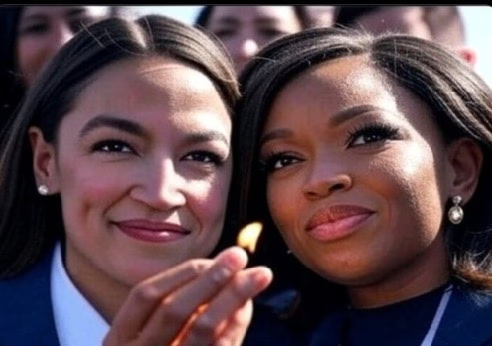
ALEXANDRIA OCASIO CORTEZ AND JASMINE CROCKETT
By SyndicatedNews at SNN.BZ
Sometimes, in real life, no particular person or party is responsible for any one event. Sometimes, the individual contributions, when happening simultaneously, create the chaos.
The January 6, 2021, Capitol riot remains a raw nerve in American politics, with new revelations continuing to spark debate. A recent Blaze Media report, citing a congressional source, disclosed that the FBI had 274 plainclothes agents present during the events—an admission that has stirred questions about transparency and accountability. At the same time, Rep. Alexandria Ocasio-Cortez (D-NY) has re-entered the spotlight, with critics revisiting her emotional account of the day to challenge its accuracy. This article aims to cut through the noise, presenting the facts on both the FBI’s role and AOC’s experience with a neutral lens, avoiding partisan spin.
The FBI’s Presence: What We Know
On September 25, 2025, Blaze Media reported that an FBI after-action report, recently shared with House Republicans, confirmed 274 plainclothes agents were in Washington, D.C., during the January 6 riot. This figure, significantly higher than previously acknowledged, was revealed under new FBI Director Kash Patel, appointed after the 2024 election. The report, long sought by lawmakers like Rep. Barry Loudermilk (R-GA), has raised eyebrows due to its delayed release and the sheer number of agents involved.
The facts are straightforward but incomplete. According to the December 2024 Department of Justice Inspector General (OIG) report, the FBI had 26 confidential human sources (informants, not full agents) in D.C. that day, with only three directed by the bureau. None were authorized to incite violence or break laws, and no undercover FBI employees were found in the Capitol itself. The 274 agents were primarily response personnel, deployed after the breach began around 1:10 p.m. to assist with bomb threats, evacuations, and tactical support at the Capitol Police’s request. Some agents expressed frustration, feeling unprepared or like “pawns” in a chaotic operation.
What’s unclear is the full scope of their activities. The OIG report criticized the FBI for inadequate pre-riot intelligence, such as failing to fully coordinate with field offices. The delayed disclosure—over four years later—has fueled distrust, with some questioning whether the bureau withheld details to avoid scrutiny. However, there’s no evidence supporting claims that agents orchestrated or provoked the riot. The data suggests a reactive, not proactive, presence, but the lack of transparency invites further investigation.
AOC’s Account: Context and Controversy
Rep. Alexandria Ocasio-Cortez, then 31, shared a vivid account of her January 6 experience in a February 2021 Instagram Live. She described barricading herself in her Cannon House Office Building office, fearing for her life as she heard footsteps and shouting in the halls. As a sexual assault survivor, she linked her fear to past trauma, emphasizing the visceral terror of the day. Her story resonated with many but drew skepticism from others who argued she overstated her danger, given that rioters did not enter her building.
The facts support her core narrative. The Cannon House Office Building, part of the Capitol complex, was evacuated due to credible threats, including pipe bombs found nearby. Capitol Police were on high alert, with officers rushing through hallways to secure lawmakers. AOC never claimed rioters breached her office or that she was in the main Capitol dome. Public records show protests escalated January 4-5, FBI bulletins warned of violence, and Capitol Police briefed lawmakers by 9 a.m. on January 6. Her mentions of “tensions” and warnings align with this timeline, shared by other lawmakers across parties.
Critics, however, have questioned her emotional framing, suggesting it was exaggerated for political effect. Social media posts and videos, like one from Tim Pool, have labeled her account a “lie,” pointing out that her office was not directly invaded. Supporters counter that the fear was real—rioters chanted violent threats, including against Vice President Mike Pence, and online posts targeted AOC specifically. The debate often splits along partisan lines: Some see her as amplifying trauma for attention, while others view her openness as a human response to a chaotic, violent event.
The Bigger Picture: Transparency and Healing
The January 6 riot, which injured over 140 officers and led to five deaths in its immediate aftermath, was a complex event driven by a mix of misinformation, political fervor, and security failures. Over 1,400 individuals have been charged, with groups like the Proud Boys and Oath Keepers playing documented roles. The FBI’s 274-agent revelation adds a layer to the story, raising valid questions about federal preparedness and openness. Why was the report withheld for so long? What exactly did these agents do? These deserve answers, not assumptions of conspiracy or cover-up.
AOC’s story, meanwhile, reflects the human toll of that day. Whether her account resonates or feels overblown depends on perspective, but it’s grounded in the documented chaos of the Capitol complex. Dismissing it outright ignores the broader context; fixating on it distracts from larger systemic issues. Both sides of the debate risk missing the forest for the trees.
As we approach the fifth anniversary of January 6, the focus should be on clarity and accountability. The FBI must fully disclose its actions to rebuild trust. Lawmakers, including AOC, should be heard without being reduced to caricatures. And the public deserves a discourse that prioritizes evidence over outrage. Only then can we move beyond the echo chambers and toward a shared understanding of one of America’s darkest days.