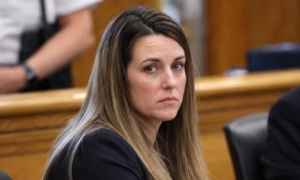
Mahmoud Khalil Hamas Advocate OFF TO ALGERIA
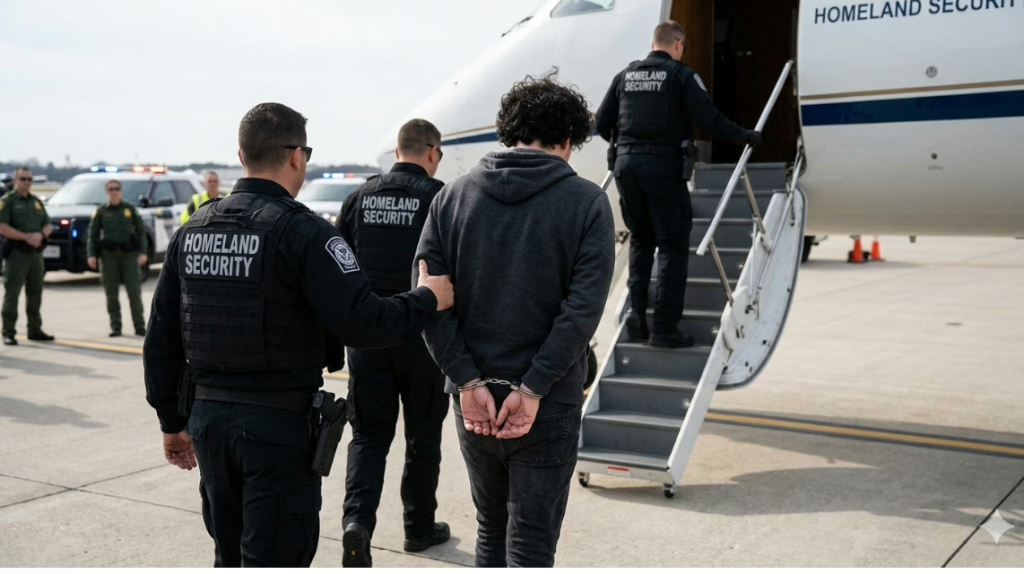
MAHMOUD KHALIL GOING HOME
On January 15, 2026, a 2-1 panel of the U.S. Court of Appeals for the Third Circuit reversed a lower federal district court’s decision that had ordered Mahmoud Khalil‘s release from ICE detention. Now he’s been ordered to leave the USA.
By SyndicatedNews | SNN.BZ
A high-profile immigration case involving former Columbia University graduate student Mahmoud Khalil has reached a critical turning point after the Board of Immigration Appeals (BIA) upheld a final order of removal, affirming that Khalil is deportable based on what the court determined were willful misrepresentations in his green card application.
The April 9, 2026 decision reinforces an earlier September 2025 ruling by an immigration judge, concluding that Khalil provided materially false or omitted key information during his application for lawful permanent residency—findings that have now become central to one of the most politically charged immigration cases in recent years.
Court: Misrepresentations Were Willful and Material
According to the ruling, immigration authorities—including the Department of Homeland Security—presented evidence that Khalil failed to disclose several significant affiliations and roles on his 2024 green card application.
These included:
- A reported position as a political affairs officer with the UNRWA in 2023
- Continued work linked to the Syria Office at the British Embassy Beirut beyond what was disclosed
- Involvement with Columbia University Apartheid Divest (CUAD), a campus activist group
The immigration judge determined these omissions were not accidental, but constituted a “willful misrepresentation of material facts”—a legal threshold that, under U.S. immigration law, renders an applicant inadmissible at the time of status adjustment.
That finding proved decisive. The BIA, in its review, upheld the conclusion in full, rejecting arguments that the omissions were minor or immaterial.
Appeals Exhausted, Removal Now Authorized
With the BIA’s ruling, Khalil’s administrative appeals have been exhausted. The decision authorizes his removal to Algeria—his country of citizenship—or potentially Syria.
His legal team has indicated they will seek further review in the United States Court of Appeals for the Fifth Circuit, marking the next phase of what is expected to be a prolonged legal battle.
Separately, the case includes a foreign policy determination by Marco Rubio, who concluded Khalil’s continued presence in the United States could carry “serious adverse foreign policy consequences.” The BIA upheld that determination as well.
Marriage and Activism at the Center of Debate
Khalil, a Syrian-born Algerian-Palestinian (is an unlawful permanent resident who is still in the USA because all parties were waiting for a final ruling), which he has now lost). His wife was born in the US. However, legal precedent is clear that marriage does not override findings of fraud or misrepresentation in immigration proceedings.
Khalil and his supporters argue the case is politically motivated, pointing to his involvement in pro-Palestinian campus protests following the October 7 attacks on Israel. They maintain the government is using immigration law to penalize protected speech and emphasize that no criminal wrongdoing or terrorist affiliations have been established.
Critics counter that the issue is not political expression but compliance with immigration law, arguing that the court’s findings of willful deception on official documents justify removal regardless of activism or personal circumstances.
National Reaction: A Familiar Divide
The ruling has sparked intense backlash among advocacy groups and commentators, particularly on the political left, where critics view the decision as overly punitive and emblematic of broader enforcement trends.
Others have defended the outcome as a straightforward application of long-standing legal standards, emphasizing that the immigration system depends on truthful disclosure and that material misrepresentation carries serious consequences.
What Comes Next
Despite the administrative ruling, Khalil is not yet in custody due to an ongoing federal habeas corpus case that continues to delay detention and removal while judicial review proceeds.
The case is expected to move through the federal courts in the coming months, where it may test the limits of how immigration law intersects with political activity, national security considerations, and due process protections.
For now, the BIA’s decision stands: the omissions in Khalil’s green card application were not only significant—they were, in the court’s words, willful.