Hialeah Mayor Driving Car With Police Lights
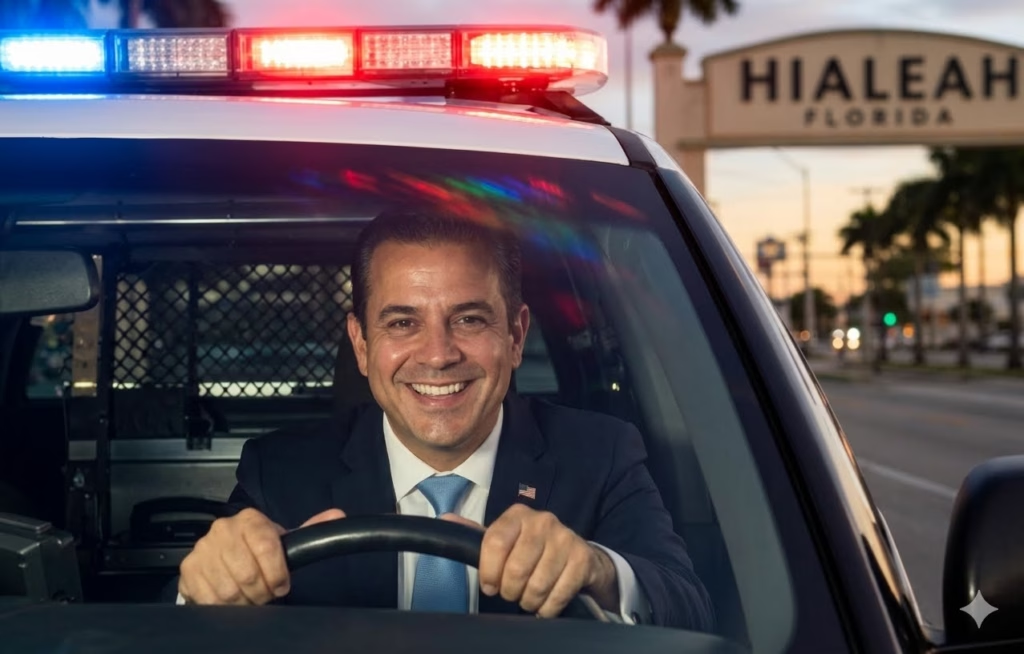
HIALEAH MAYOR COULDN'T WAIT TO COMMIT TRAFFIC INFRACTIONS WITH A POLICE LIGHT EQUIPPED CAR - WHAT FUN!
Bryan Calvo is facing renewed scrutiny after a Miami Police traffic stop resulted in two civil citations while he was driving a city-owned sport utility vehicle equipped with emergency lighting.
By SyndicatedNews | SNN.BZ
HIALEAH, Fla. — Hialeah Mayor The stop has sparked questions about whether elected officials should operate vehicles containing law enforcement-style equipment and whether such vehicles create confusion for the public.
According to Miami Police, the incident occurred on June 14 in Coconut Grove after an officer observed the mayor allegedly fail to obey a right-turn-only traffic control device. During the stop, the officer also alleged the vehicle displayed flashing red and blue emergency lights. Police identified the SUV as a vehicle owned by the Hialeah Police Department and assigned for the mayor’s use.
Body camera footage later released by Miami Police captured the exchange between the officer and Mayor Calvo. During the encounter, the officer questioned why the emergency lights had been activated and advised the mayor that individuals who are not sworn law enforcement officers generally are not authorized to engage police emergency lighting during a traffic stop. The encounter concluded with the issuance of two civil traffic citations rather than an arrest.
One citation alleges a traffic-control violation involving an improper turn. The second concerns the operation of a vehicle displaying prohibited emergency lighting. Florida law generally restricts the display of blue emergency lights to authorized law enforcement vehicles, with limited statutory exceptions. Miami Police officials stated they did not believe the circumstances warranted an impersonation-of-a-law-enforcement-officer charge.
Through a spokesperson, Mayor Calvo has maintained that the SUV was owned by the Hialeah Police Department and had been retrofitted with the emergency equipment before he assumed office or before the vehicle was assigned to him. He entered not guilty pleas to both civil citations, and the matter is expected to proceed through the court process.
The incident has generated public debate across South Florida regarding the appearance and use of government vehicles assigned to elected officials. Legal observers have noted that while municipal executives may receive security details or official transportation, Florida statutes still regulate the installation and use of emergency lighting regardless of the driver’s public office.
The release of the body camera video has intensified that discussion by providing the public with the officer’s firsthand account of the stop. Supporters of the mayor argue the issue centers on equipment already installed on a city-owned vehicle, while critics contend that public confidence depends upon strict adherence to the same traffic laws that apply to every motorist.
As of publication, the citations remain pending before the court. The case will likely determine whether the equipment, its operation, or both violated Florida traffic law. Regardless of the outcome, the incident has focused attention on the policies governing official government vehicles and whether additional safeguards are needed to prevent confusion between elected officials and sworn law enforcement officers.