Islamic Tribunal Of Dallas Endangers The Entire USA
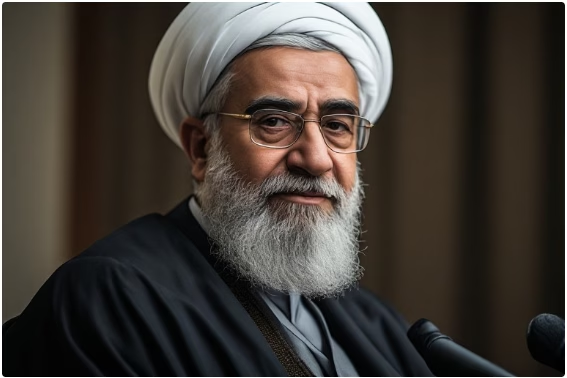
The Islamic Tribunal (IT) in Texas, which has positioned itself as a body applying Islamic principles (Sharia) to disputes within the Muslim community.
By SyndicatedNews | SNN.BZ
Eleven years ago, many online websites, blogs and other consservative news sources warned the United States about the danger of Sharia Law being spread throughout the United States. Well its rearing its head again. The tribunal has being trying cases.
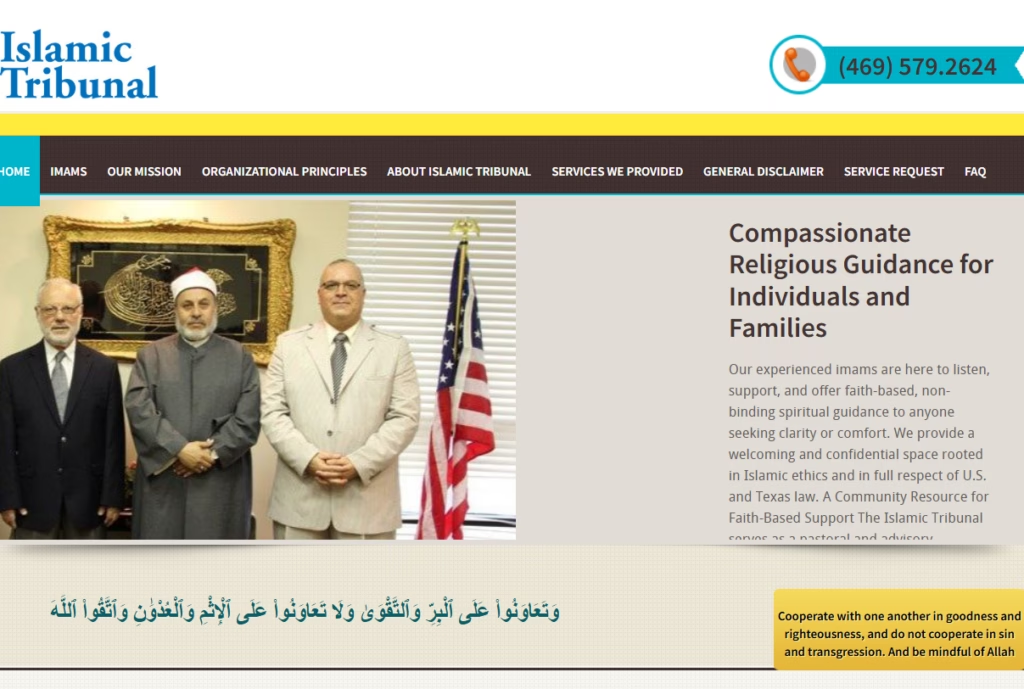
The tribunal presents itself on its site as offering voluntary, non-binding religious guidance, mediation, and spiritual counseling—comparing itself to Jewish Beth Din or Catholic tribunals—and insists it does not issue legally binding judgments or replace U.S. courts.
However, its history, past descriptions, and actions have drawn intense scrutiny from Texas officials, including Governor Greg Abbott and Attorney General Ken Paxton, who have launched investigations into whether it misleads participants, claims improper authority, or undermines state law. It is a matter that should be given the same importance by Tom Hogan as has been given to illegal immigration.
The Dangers Presented By Having Islamic Tribunals in the United States
The establishment and operation of entities like the Islamic Tribunal in Texas represent a serious challenge to the rule of law, individual rights, and the foundational principles of the American republic. While framed as harmless “faith-based mediation,” such tribunals risk creating parallel legal systems that prioritize Sharia over the U.S. Constitution, erode equality under the law, and foster divisions that could fracture society. This is not abstract theory—real-world examples from the U.S. and abroad demonstrate the risks.
1. Undermining the Supremacy of U.S. Law and the Constitution
The United States operates under a single legal system grounded in the Constitution, which guarantees due process, equal protection, free speech, religious liberty, and equality between men and women. Sharia, derived from the Quran, Hadith, and Islamic jurisprudence, often conflicts directly with these: it can prescribe unequal inheritance (women receiving half of men), testimony weights favoring men, restrictions on apostasy or blasphemy, and corporal punishments in classical interpretations.
Even if “voluntary,” tribunals create pressure within tight-knit communities. Participants—especially women, converts, or those facing family ostracism—may feel coerced into accepting “religious” outcomes on divorce, custody, or business disputes rather than pursuing full civil remedies. Texas investigations highlight concerns that the Tribunal has portrayed its decisions as final or approved by the state judicial system, misleading people into believing Sharia rulings carry legal weight. This erodes public confidence in secular courts and normalizes the idea that different groups can opt out of American law.
Religious arbitration exists for other faiths, but it must stay strictly subordinate to civil law, with robust judicial review. Critics argue Islamic tribunals, tied to a comprehensive political-religious system (Islam as din wa dawla—religion and state), have greater ambitions.
2. Risks to Vulnerable Individuals, Especially Women and Children
Family disputes are a core focus. Under certain Sharia interpretations, husbands have easier divorce rights (talaq), wives face obstacles, and custody often defaults to fathers after young ages. In insular communities, “voluntary” participation can mask coercion through social, familial, or spiritual threats. Reports and criticisms of similar bodies note imbalances of power, where women may not fully understand rights under U.S. law or fear community backlash for appealing to secular courts.
Child welfare is another flashpoint. U.S. courts prioritize the “best interest of the child”; Sharia-influenced decisions may emphasize religious upbringing or paternal authority in ways that conflict with this. Allowing parallel systems risks leaving victims without full protections against domestic issues or unfair asset divisions.
3. Creeping Parallel Societies and “No-Go” Dynamics
Europe provides cautionary examples: informal Sharia councils in the UK have handled thousands of cases, often pressuring women into reconciliations or unfair divorces, with limited oversight. Critics warn this fosters parallel societies where integration stalls and loyalty to religious law supersedes national identity. In the U.S., the Tribunal’s presence in Texas—a state with a growing Muslim population—has been cited as an early warning. Polls and statements from some Muslim groups show significant support for Sharia options, raising questions about long-term goals.
This isn’t mere religious practice; it’s institutionalizing a competing authority. Over time, normalization could lead to demands for broader accommodations—in schools, finance, or public policy—further fragmenting the common civic culture essential to a pluralistic democracy.
4. Security and Ideological Concerns
While most participants seek genuine spiritual guidance, Sharia’s political dimension (including supremacist elements in classical texts) aligns with Islamist ideologies that view Western law as inferior. Investigations into the Tribunal coincide with broader congressional hearings on “Political Islam & Sharia Law” as incompatible with the Constitution. Allowing such bodies unchecked risks providing cover for extremism or radicalization under the guise of “community dispute resolution.”
Transparency issues compound this: the Tribunal’s website updates emphasize non-binding status amid public backlash, suggesting reactive PR rather than fundamental alignment with American norms.
5. Legal and Societal Precedent
If one group operates a de facto tribunal, others may follow, balkanizing justice. The First Amendment protects religious freedom but not the right to establish rival judiciaries that supplant civil authority. Texas officials are right to investigate misrepresentation and potential unauthorized practice of law.
Conclusion: Defending One Law for All
The Islamic Tribunal, regardless of current disclaimers, embodies the danger of importing incompatible legal philosophies into a constitutional republic. Americans of all faiths should support robust oversight, strict limits on religious arbitration (full disclosure of rights, easy access to civil courts, no coercion), and rejection of any system that treats citizens differently based on religion.
Preserving the rule of secular, equal law isn’t bigotry—it’s the bedrock of liberty. Vigilance against parallel Sharia structures protects Muslims and non-Muslims alike from the divisiveness and rights erosions seen elsewhere. Texas’ scrutiny sets a necessary example: America welcomes faith but demands loyalty to its Constitution above all.