U.S. and Israel Conduct Airstrikes on Iran

IRAN IN 2008
The Killing Of Supreme Leader Ayatollah Ali Khamenei
By SyndicatedNews Legal Eagle | SNN.BZ
WASHINGTON — On February 28, 2026, the United States and Israel carried out coordinated military strikes on multiple targets inside Iran, resulting in the death of Iran’s Supreme Leader, Ayatollah Ali Khamenei, and several other senior Iranian officials.
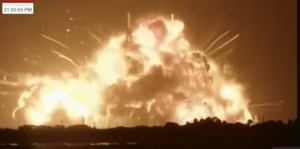
The operation began early on Saturday with airstrikes and missile launches aimed at leadership sites in Tehran, ballistic-missile facilities, naval assets and other military installations across the country. Satellite imagery later showed damage to compounds associated with the Iranian leadership.
President Donald J. Trump announced the U.S. involvement later that day, describing the action as a “major combat operation” intended to address what American officials called imminent threats from Iran’s missile program and other capabilities. The Pentagon referred to the effort as Operation Epic Fury. Israeli forces participated under their own designation, Operation Roaring Lion.
Iranian state television confirmed early on March 1 that Ayatollah Khamenei had been killed in the strikes. The government declared 40 days of national mourning. Iranian officials also reported deaths among senior military commanders and other figures.

In response, Iran launched missile and drone attacks targeting locations in the Gulf region and Israel. Hezbollah, an Iranian-backed group in Lebanon, also fired rockets into northern Israel. The Pentagon stated that three American service members were killed and others wounded during the exchanges of fire. Additional strikes and counterstrikes continued into Sunday.
The events followed the breakdown of recent negotiations aimed at limiting Iran’s nuclear program. No agreement had been reached in the latest round of talks.
As of Sunday evening, U.S. and Israeli operations were reported to be continuing. President Trump stated that the campaign would proceed until stated objectives were met and warned that any further Iranian retaliation would be met with significant force. He also noted the possibility of additional American casualties.
The situation on the ground remains fluid. Airspace across parts of the Middle East has been restricted, oil prices have risen sharply, and some governments have issued travel advisories.
It is not possible at this time to say with certainty when the current round of hostilities will subside. Statements from the U.S. side have indicated that active operations could last several weeks. Longer-term stability will depend on developments inside Iran, including any succession process, and on diplomatic contacts that may emerge among the parties and other nations.
Historical precedents in the region show that such episodes can de-escalate through negotiation or persist for extended periods, depending on the choices made by all involved.