How Rolex Brainwashes People into Buying $80,000 Watches: Secrets of Rolex Marketing

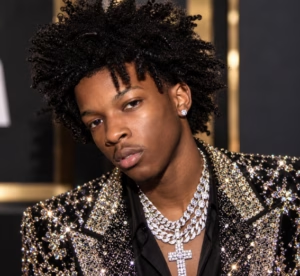
LIKE THE ROLEX, PRISTINE IS ALSO A BRAND MOSTLY WORN BY RAPPERS
BY SyndicatedNews at SNN.BZ
Unraveling How Rolex Brainwashes People into Buying $80,000 Watches
When you think of luxury watches, Rolex immediately comes to mind. But how does Rolex brainwash people into buying $80,000 watches? The answer lies in Rolex’s masterful marketing strategies, psychological tactics, and branding that create an irresistible allure for luxury watch buyers. This article explores the secrets behind how Rolex convinces consumers to invest in $80,000 watches, turning a timepiece into a symbol of status and desire.
The Psychology of How Rolex Brainwashes People into Buying $80,000 Watches
Rolex’s ability to brainwash people into buying $80,000 watches hinges on psychological principles that tap into human desires. By creating an aura of exclusivity, Rolex ensures that its luxury watches are perceived as rare treasures. The scarcity tactic, a cornerstone of Rolex marketing, limits production to fuel demand. When customers face waitlists for models like the Rolex Daytona or Submariner, they feel privileged to even have the chance to buy $80,000 watches. This scarcity-driven desire is a key reason why Rolex brainwashes people into buying $80,000 watches.
Rolex Marketing: Crafting Status with Luxury Watches
Rolex’s marketing genius lies in positioning its watches as symbols of success. By associating luxury watches with celebrities, athletes, and events like Wimbledon, Rolex brainwashes people into buying $80,000 watches by leveraging social proof. When consumers see influential figures sporting a Rolex, they crave the status that comes with owning one. This Rolex marketing strategy makes buying $80,000 watches feel like an entry into an elite club, not just a purchase.
Heritage and Craftsmanship in Rolex’s $80,000 Watches
Another way Rolex brainwashes people into buying $80,000 watches is through its rich heritage and craftsmanship narrative. Rolex highlights its history, like creating the first waterproof Oyster watch in 1926, to sell the idea of timeless value. The brand’s in-house manufacturing, including its gold foundry, reinforces the perception that $80,000 watches are worth every penny. By emphasizing hand-assembled precision, Rolex marketing convinces buyers they’re investing in a legacy, not just a luxury watch.
The Veblen Effect: Why $80,000 Watches Sell
Rolex’s $80,000 watches are Veblen goods—products that become more desirable as their price rises. This phenomenon is central to how Rolex brainwashes people into buying $80,000 watches. The high cost signals exclusivity, making the watch a status symbol rather than a mere timekeeper. Rolex marketing capitalizes on this by ensuring its luxury watches are seen as investments in social capital, driving demand for $80,000 watches among affluent buyers.
Emotional Storytelling in Rolex Marketing
Rolex brainwashes people into buying $80,000 watches by weaving emotional stories into its marketing. Tales of explorers wearing Rolex on Everest or divers in the Mariana Trench create a sense of adventure and prestige. These narratives make buyers feel they’re part of a grand tradition when purchasing $80,000 watches. Rolex marketing taps into emotions, transforming luxury watches into symbols of achievement and legacy.
The Rolex Retail Experience and Buying $80,000 Watches
The process of buying $80,000 watches is designed to feel exclusive. Rolex’s authorized dealers create a sense of privilege through waitlists, vetting, and personalized service. This retail strategy is part of how Rolex brainwashes people into buying $80,000 watches, making the purchase feel like an earned milestone. The curated experience reinforces the value of Rolex luxury watches, ensuring buyers see their $80,000 watches as more than just products.
Resale Value: A Financial Incentive for $80,000 Watches
Rolex brainwashes people into buying $80,000 watches by highlighting their resale potential. Many Rolex models, especially limited editions, retain or increase in value on the secondary market. This investment angle, a key part of Rolex marketing, reduces hesitation, as buyers see $80,000 watches as financial assets. The promise of resale value makes purchasing luxury watches feel like a smart decision, not just a luxury splurge.
Why Rolex’s $80,000 Watches Dominate the Luxury Market
In conclusion, Rolex brainwashes people into buying $80,000 watches through a blend of scarcity, status, storytelling, and strategic marketing. By making luxury watches symbols of prestige, craftsmanship, and investment, Rolex ensures its $80,000 watches are more than timepieces—they’re a lifestyle. Rolex marketing creates a world where buying $80,000 watches feels like a natural choice for those seeking exclusivity and success.
Young Black rappers, often rising from poverty out of Brooklyn, the South Bronx and Queens, New York exemplify a striking phenomenon.
They are skillfully persuaded to invest in a single timepiece—such as a Rolex—costing more than the collective sum their families might have spent on an entire home, even when every member contributed to its purchase. This reflects the powerful allure of luxury marketing, which captivates ambition and aspiration, transforming symbols of status into irresistible investments.
The significance of luxury watches to rappers; Wearing extravagant watches and jewelry symbolizes their incredible rags-to-riches journey.
- Displays of success: For many who grew up without means, an “iced-out” watch, embellished with diamonds, is an undeniable and highly visible statement of wealth and achievement.
- Status symbol: By sporting timepieces from prestigious brands like Audemars Piguet and Patek Philippe, artists establish themselves as members of the elite.
- Hip-hop tradition: The flashy display of jewelry is a long-standing part of hip-hop culture, from gold chains in the ’80s and ’90s to today’s luxury watches.