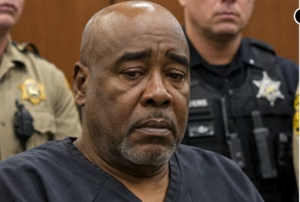
Diddy’s Victory Party Plans: Final Blow to Faith in Law Enforcement
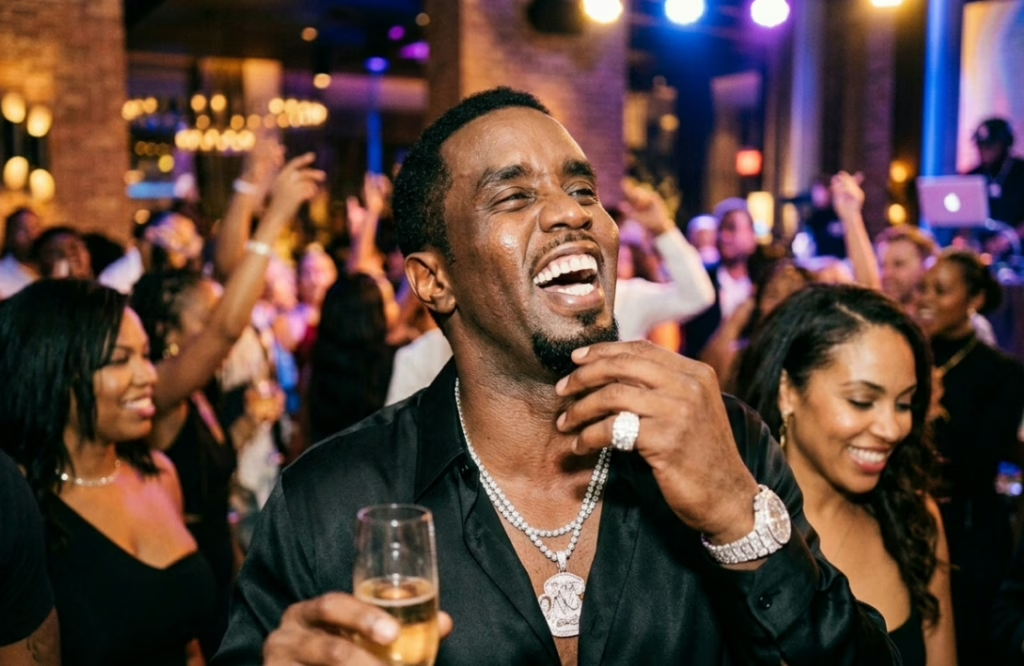
He's back!
In the age of social media leaks and celebrity insiders, word has spread like wildfire: Sean “Diddy” Combs is already mapping out what some are calling his “victory tour” — or at least a lavish post-prison celebration — for the day he walks free from federal custody.
By SyndicatedNews Music | SNN.BZ
In the age of social media leaks and celebrity insiders, word has spread like wildfire: Sean “Diddy” Combs is already mapping out what some are calling his “victory tour” — or at least a lavish post-prison celebration — for the day he walks free from federal custody.
According to multiple reports circulating in early 2026, the music mogul’s inner circle is quietly sketching guest lists, scouting venues, and dialing up the vibe for what could be the biggest “welcome home” bash of his career. Sources close to Combs describe it as bigger than his legendary White Parties, a full-on coronation meant to signal triumph rather than contrition.
The timing couldn’t be more pointed. As of April 2026, Combs remains locked up at FCI Fort Dix, a low-security federal prison in New Jersey. He was sentenced in October 2025 to 50 months behind bars after his conviction on two counts related to the Mann Act — federal charges involving the transportation of individuals for prostitution tied to his infamous “freak-off” parties.
His projected release date has been nudged forward multiple times thanks to good-conduct credits, now landing around April 15, 2028. An appeal hearing earlier this month saw his lawyers argue aggressively for immediate release or a drastically reduced sentence, claiming the encounters were protected “amateur adult content” under the First Amendment. Judges appeared skeptical, but the legal maneuvering continues.
Yet even while still incarcerated, the planning for his comeback is reportedly in motion. Insiders tell outlets that Combs’ team is operating as if freedom could arrive “any day,” treating the appeal like a foregone conclusion and the prison stint like a temporary setback rather than accountability. One source put it bluntly: Combs wants it to feel like a coronation.
This is precisely why so many young people — and increasingly, Americans of all ages — have stopped taking law enforcement seriously.
When a high-profile figure like Diddy, once one of the most powerful names in hip-hop and entertainment, can be convicted on serious federal charges and still have his camp openly prepping a victory lap, it reinforces a toxic narrative: the system is rigged for the rich and famous. The average person sees endless headlines about no-knock warrants, asset forfeitures, and aggressive policing in everyday neighborhoods. Then they watch a celebrity who faced accusations of sex trafficking, coercion, and abuse spend less than five years in a low-security facility — with early-release adjustments and a red-carpet exit strategy already in the works.
Public trust in institutions was already crumbling. Gallup polls and Pew Research have documented a steady decline in confidence in police and the justice system over the past decade, particularly among Gen Z and millennials. High-profile cases involving celebrities — from O.J. Simpson’s acquittal decades ago to more recent examples of lenient treatment for the ultra-wealthy — only accelerate the cynicism. Young people scroll past bodycam footage of routine traffic stops escalating into arrests while simultaneously seeing Diddy’s team hype a “biggest release party ever.” The message lands loud and clear: rules are for the little guy.
Law enforcement officials and prosecutors have long complained about a “Ferguson effect” or “ACAB” mindset eroding cooperation with police. But optics matter. When the public perceives two-tiered justice — one for everyday citizens and another for those with deep pockets, star power, and elite legal teams — respect evaporates. Diddy’s rumored victory plans aren’t just tone-deaf; they’re a flashing neon sign of that double standard.
Combs has not been convicted of the most explosive racketeering and sex-trafficking charges originally leveled against him; some counts were dropped before trial. His defenders argue the sentence was overly harsh for the prostitution-related convictions that stuck. Fair enough — appeals exist for a reason, and due process should apply to everyone. But the court of public opinion operates differently. When the narrative shifts from “accountability” to “coronation,” it doesn’t matter how many months he ultimately serves. The damage to institutional credibility is already done.
In an era where viral clips, insider whispers, and Substack scoops shape public discourse more than official statements, Diddy’s alleged victory tour planning is more than celebrity gossip. It’s Exhibit A in why large swaths of the population — especially younger generations raised on social media — view law enforcement not as protectors of justice, but as selective enforcers who let the powerful skate while hammering everyone else.
Whether the party happens in 2028 or sooner depends on the appeals courts. What’s already certain is this: every rumor of Diddy’s comeback celebration chips away a little more at whatever faith remains in the system. And once that trust is gone, it’s not easily won back — no matter how many press releases or bodycam videos the authorities put out. The kids aren’t buying it anymore. They’re watching the victory lap instead.