U.S. Offers Children $3,000 “each” to Leave
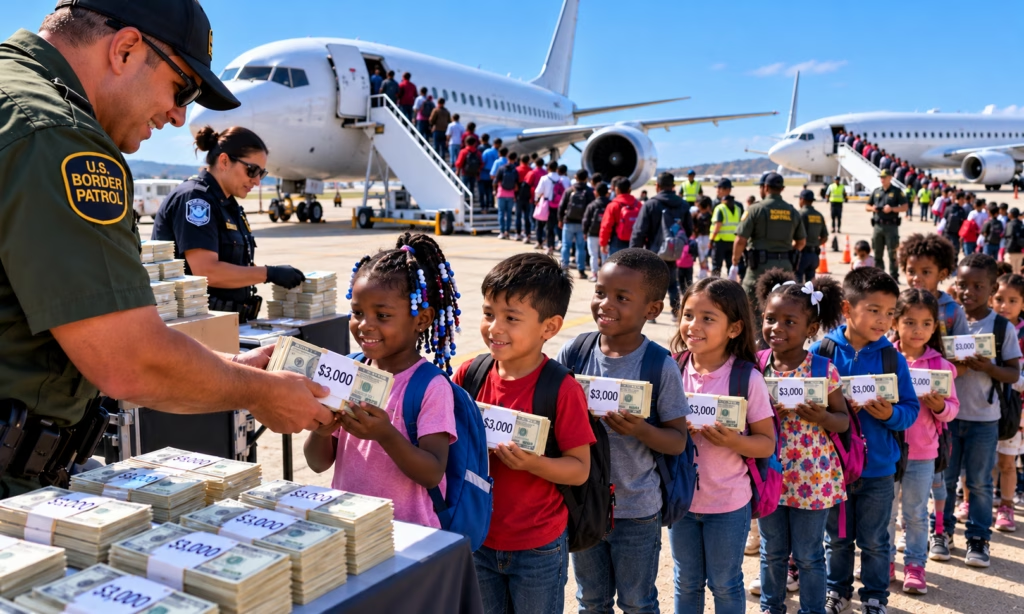
The Trump administration has expanded financial incentives encouraging undocumented immigrants to leave the United States, with reports that children as young as five have been offered $3,000 to voluntarily depart.
By Arthur Reed | Immigration & Federal Policy
The development, first reported by Bloomberg Law on October 9, 2026, represents a significant expansion of earlier incentives for unaccompanied migrant children. The reported offers have raised questions about eligibility, legal representation, parental involvement and whether young children can meaningfully consent to such decisions.
The Department of Homeland Security (DHS) has confirmed that a $3,000 departure incentive is being offered to certain unaccompanied minors. However, the agency’s publicly confirmed eligibility criteria differ from reports involving younger children. On October 13, a DHS official told ABC News that the payment applies to children 14 years or older, in government custody, without gang affiliations. Attorneys representing migrant children separately reported receiving offers involving children younger than 14, including an 11-year-old and children reportedly as young as five. DHS has not publicly confirmed that five-year-olds qualify under its official policy.
The administration’s financial incentives have increased considerably since 2025. Initially, DHS offered eligible adults $1,000 to arrange their departures through the CBP Home application, together with travel assistance. In October 2025, the government introduced a separate $2,500 resettlement incentive for certain unaccompanied minors aged 14 and older. By October 2026, the reported amount for qualifying children had risen to $3,000. The administration maintains that voluntary departure programs offer an alternative to detention and forced removal.
The government’s broader self-deportation initiative operates through the CBP Home mobile application, which allows eligible individuals to register their intention to leave the country. Federal officials have described assistance that includes transportation, airline tickets and help obtaining travel documents. A separate process involving unaccompanied children in immigration proceedings has generated particular controversy because immigration attorneys report that financial offers are sometimes communicated through government lawyers or immigration judges. The precise payment arrangements and approval requirements for children younger than 14 remain unclear.
The administration has defended its approach as part of an effort to reunite unaccompanied migrant children with their families and prevent exploitation. DHS has raised concerns about children previously released to sponsors who may have been involved in trafficking or other criminal activities. Immigration advocates, however, argue that offering money to children facing possible removal creates pressure to abandon asylum applications or other legal protections. Attorneys have also reported instances in which children were asked to consider the offers without adequate time or independent legal advice.
The financial implications extend beyond the individual payment. Federal officials have argued that assisted voluntary departures can cost taxpayers substantially less than arresting, detaining and deporting individuals through enforcement proceedings. The government has also offered qualifying participants relief from certain civil penalties for failing to depart. An October 14, 2026, Federal Register publication describes the administration’s travel assistance and financial incentive programs, although it does not independently establish that all children, regardless of age, qualify for $3,000.
Important legal distinctions remain. Voluntary departure ordered through immigration proceedings is not necessarily the same as self-deportation through CBP Home. Leaving the United States can affect pending asylum applications, immigration court proceedings and eligibility for future admission. Children may also have claims for humanitarian protection that require individual consideration. Immigration attorneys emphasize that financial assistance does not automatically erase prior immigration violations or guarantee permission to return to the United States.
As of October 23, 2026, the $3,000 incentive for certain unaccompanied migrant children is confirmed, while reports that five-year-olds have received offers remain based on accounts from immigration attorneys and advocacy organizations rather than a publicly confirmed DHS eligibility rule. The central unresolved questions concern how younger children are approached, who authorizes their departure, what protections apply and whether payments are ultimately delivered. Those distinctions will determine whether the initiative operates as an assisted departure program or becomes the subject of further legal challenges.
- U.S. Department of Homeland Security — CBP Home
- Federal Register — October 14, 2026, Immigration Penalties and Departure Programs
- Bloomberg Law — $3,000 Offers to Children, October 9–10
- ABC News — DHS Confirms Eligibility Criteria, October 13
+3