Homeland Security Expands Arrests per Supreme Court Upholding Deportations As a Rule Of Law
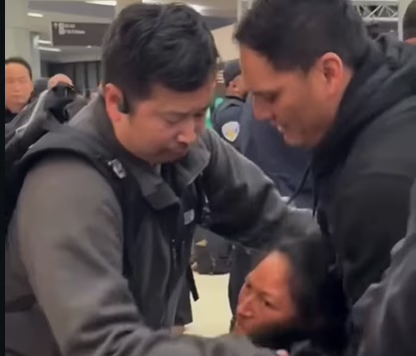
ICE ARRESTS AT THE SAN FRANCISCO AIRPORT
Homeland Security Arrests Illegal Immigrants Wherever They’re Found
SyndicatedNews Legal Eagle | SNN.BZ
The U.S. Supreme Court has recently reaffirmed the federal government’s authority to deport undocumented immigrants, clearing legal questions about the ability of the Department of Homeland Security (DHS) to enforce immigration law nationwide. In the aftermath of the decision, federal officers—including those from Homeland Security, Immigration and Customs Enforcement (ICE), and Customs and Border Protection (CBP)—have stepped up operations to locate and detain individuals suspected of being in the country without legal status wherever they are found, from airports and bus stations to public spaces.
Videos circulating on social media show emotional confrontations between officers and those being detained, including scenes of families in distress as bystanders record and question officers’ actions. Such footage has sparked intense debate over enforcement tactics.
The Case for “Self‑Deportation”
In contrast to forced removal, voluntary departure—often referred to as self‑deportation—remains an option for many individuals without legal status. Under federal immigration law, voluntary departure allows someone to leave the United States on their own terms instead of being formally removed through an enforcement action. Because voluntary departure is done before the government orders removal, it can have benefits in immigration records and future options:
- It can avoid certain bars to reentry associated with formal deportation orders.
- Leaving voluntarily lets individuals return home with dignity and personal agency.
- Some DHS programs may help with logistics or travel arrangements for those who choose this route.
Proponents of voluntary departure argue that it is more financially and legally beneficial than forced removal. It enables families to leave together, avoid detention, and potentially preserve the ability to seek legal entry in the future. Critics of strict enforcement also emphasize that unlawful entry into the United States initially was a choice, and that parents should consider the long‑term welfare of their families—including the emotional well‑being of children—when deciding how to address their immigration status.
Legal Information and Assistance
If you or someone you know is considering immigration options, wants to explore voluntary departure, or needs up‑to‑date legal guidance, there are federal resources that offer basic information and contacts:
U.S. Citizenship and Immigration Services (USCIS) – Information about immigration benefits, voluntary departure, and forms:
- Toll‑free contact center: 1‑800‑375‑5283 (TTY: 1‑800‑767‑1833)
- International callers: +1‑212‑620‑3418
USCIS provides online tools to track cases, access forms, and understand eligibility for various programs.
U.S. Immigration and Customs Enforcement (ICE) – Enforcement agency that administers removal operations and can answer general questions about immigration enforcement:
- Toll‑free line (U.S. & Canada): 1‑866‑347‑2423
- Alternative contact: 1‑802‑872‑6199
ICE also offers a detainee locator tool and field offices where individuals can inquire about their case status.
USA.gov Immigration Assistance – A general government contact center that can help navigate federal immigration resources:
- Main assistance line: 1‑844‑872‑4681 (1‑844‑USAGOV1)
This service can help direct callers to the right agency or information source for their specific situation.