France in Flames: Arson Riots Grip the Nation – What’s Left After a Day of Chaos and What’s Next for Recovery?
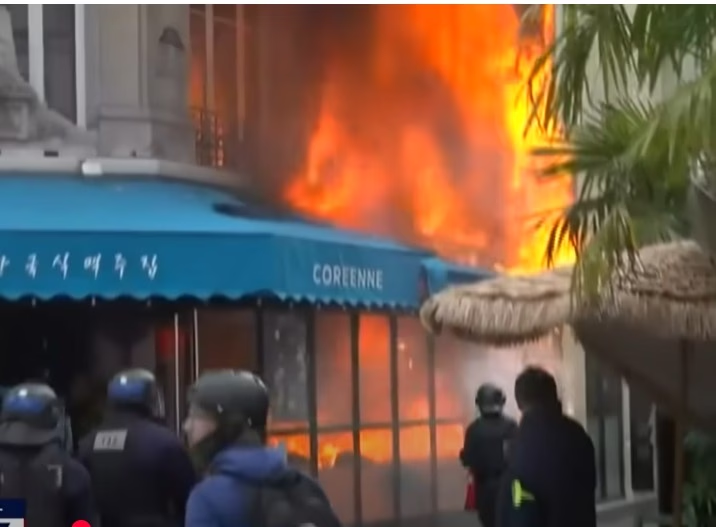
RIOTERS BURNING DOWN BUILDINGS IN FRANCE
By SyndicatedNews Insights
In the heart of Europe, France – the land of liberty, equality, and now, unfortunately, fiery unrest – finds itself teetering on the edge of turmoil. Just 24 hours after the “Block Everything” movement ignited streets from Paris to Provence, the question on everyone’s lips is: What’s left of France after these arson riots? As smoke clears from barricades and torched vehicles, the nation stares at a scorched landscape of division, destruction, and determination. This isn’t just another protest; it’s a wake-up call for a country grappling with political paralysis, economic strain, and social fractures. Let’s dive into the ashes of September 12, 2025, and chart a path forward for France’s fiery future.
The Inferno Ignited: A Day of Deliberate Fires and Defiance
Picture this: Dawn breaks over the City of Light, but instead of croissants and café au lait, protesters armed with pallets and petrol turn boulevards into blazing battlegrounds. The “Block Everything” campaign – a grassroots roar born on social media and fueled by left-wing fury against budget cuts and Emmanuel Macron’s endless political merry-go-round – exploded into action yesterday. What started as calls to halt the nation’s pulse quickly escalated into widespread arson riots across France.
From the elegant avenues of Paris to the rugged ports of Marseille, fires erupted like a chain reaction. In the capital’s affluent 1st arrondissement, a historic restaurant went up in flames, its façade reduced to charred elegance amid the chaos. Northwest in Rennes, Brittany’s vibrant hub, rioters ransacked a bus and set it ablaze, sending plumes of black smoke billowing over cobblestone streets. Nantes saw barricades of burning garbage bins light up the night, while in Caen, protesters hurled flares that turned peaceful rallies into infernos. Even Rouen, with its storied Gothic cathedral, wasn’t spared – a church was torched in what locals decried as a targeted act of cultural arson, part of a disturbing trend claiming two sacred sites weekly to “mysterious fires.”
By evening, the toll was stark: Over 800 protest actions nationwide, including rail shutdowns that stranded thousands and highway blockades that paralyzed commuters. French police, outnumbered and outfueled, unleashed volleys of tear gas, leading to a cat-and-mouse frenzy that felt more like a war zone than a workers’ revolt. Nearly 450 arrests, hundreds in custody, and over a dozen officers injured painted a picture of a nation unraveling at the seams. As one exhausted firefighter quipped amid the embers, “We’ve battled wildfires in the south; now the real blaze is in our cities.
“These arson riots weren’t spontaneous – they were deliberate, a fiery punctuation to France’s deeper woes. With five prime ministers in five years and a €3.3 trillion debt mountain, public trust in Macron’s “start-up nation” vision has crumbled to dust. Polls show 77% of French citizens rejecting his leadership, and yesterday’s unrest was their Molotov cocktail of frustration. Yet, amid the flames, glimmers of solidarity emerged: Local businesses in Tuchan-like villages (echoing summer wildfire evacuations) opened late-night stores to feed the displaced, proving France’s resilient spirit endures even in arson’s shadow.
What’s Left of France? A Nation Scorched but Standing
One full day later, as the sun rises on September 13, France emerges from the firestorm battered but unbroken. The physical damage from these urban blazes is contained compared to the summer’s raging wildfires – no vast swathes of forest lost, no mass evacuations of tens of thousands. Instead, the scars are surgical: A handful of vehicles reduced to twisted metal skeletons, a smattering of storefronts gutted by opportunistic flames, and symbolic sites like that Rouen church left as hollowed reminders of cultural vandalism. Air quality in hotspots like Paris dipped to unhealthy levels from the acrid smoke, but no widespread environmental catastrophe unfolded.
Economically, the hit stings sharper. Rail disruptions alone cost millions in lost productivity, stranding workers and tourists alike in a country already reeling from strikes in air traffic, pharmacies, and civil services. The “general strike” wave, backed by unions like FO, threatens a “black month” of blockades, amplifying the arson riots’ ripple effects on France’s fragile recovery. Socially, the divide deepens: Urban youth chant for change, while suburban families fear the next spark. And let’s not ignore the undercurrent – whispers of “jihadis” in church burnings fuel far-right narratives, even as evidence points to broader protest mayhem. France’s fabric is frayed, but its core – that unyielding joie de vivre – remains intact. Unlike the apocalyptic August wildfires that claimed lives and 16,000 hectares, these city fires were doused by dusk, a testament to firefighters’ heroism in a year already etched as Europe’s worst for blazes.
France’s Next Steps: From Ashes to Action – A Roadmap to Rebuild
So, what now for a nation singed by its own hand? France can’t afford to let these arson riots smolder into systemic failure. Here’s a pragmatic playbook to rise from the rubble, blending urgency with unity:
- Quell the Flames with Dialogue, Not Just Tear Gas: Prime Minister Sébastien Lecornu’s baptism by fire demands an immediate roundtable. Invite union leaders, youth activists, and opposition voices to hash out budget reforms. Macron’s top-down style fueled the fury; bottom-up talks could douse it. Aim for concessions on austerity – perhaps targeted tax relief for fire-ravaged communities – to prevent the September 18 mega-strike from turning into round two.
- Bolster the Frontlines: Honor Firefighters as National Heroes: These unsung warriors, who tamed 109 blazes during August’s heatwave onslaught, deserve more than applause. Pump resources into training and tech – drones for early arson detection, AI-monitored forests to preempt wildfires. And culturally? Launch a “Guardians of the Flame” campaign to recruit diverse talent, turning yesterday’s chaos into tomorrow’s safeguards.
- Tackle the Roots: Economic Revival Amid Climate Crunch: France’s debt inferno mirrors its literal fires. Slash bureaucracy to unleash that start-up spark Macron once promised, while greenlighting sustainable jobs in wildfire-prone south – think eco-tourism in Aude’s recovering vineyards. Internationally, lean on EU allies for a “Fire-Resilient Europe” fund, sharing lessons from Portugal’s scorched summers. And on immigration-fueled tensions? Transparent investigations into church arsons, without scapegoating, to heal divides.
- Ignite Hope: A National Day of Renewal: Declare October 1 as “France Reborn” – a nationwide cleanup and community fest. From planting trees in Rouen to mural projects on Paris barricade sites, channel the protest energy into positive fire. Macron could lead by example, rolling up sleeves in a hard hat, proving leadership isn’t about dodging flames but fanning the flames of progress.
France has danced with disaster before – from yellow vests to gilets jaunes – and emerged fiercer. These arson riots are a blister, not a burn-out. As the mistral winds that once fanned wildfires whisper change, the nation must choose: Let division devour it, or forge a bolder, brighter blaze of unity?
What do you think – can France turn its fires into fuel for the future? Share your thoughts below.
But hold up—this isn’t just about flames; it’s a full-on clash between nature’s wrath, government gripes, and the raw frustration of a generation that’s seen one “unprecedented” crisis too many. Let’s break it down, no BS, for us 20-35 crew who’s old enough to remember simpler summers but young enough to rage about it online.
Picture this: It’s early August, and a spark—maybe a careless cigarette, a lightning strike, or straight-up arson (investigators are still digging)—ignites near the village of Ribaute in the Aude department, just a stone’s throw from the Spanish border. Winds whip up to 50 km/h, temps hit 40°C (that’s 104°F for my American peeps), and drought has turned the Corbières hills into a tinderbox drier than your ex’s sense of humor. Boom: In 72 hours, the fire swallows 17,000 hectares—over 40,000 acres, bigger than Paris itself. One woman dies in her home, 25 people get hurt (including 19 firefighters battling through smoke thicker than a bad hangover fog), and at least 36 homes go up in smoke. Evacuations hit 2,000+ folks, roads shut down, and the air reeks of charred earth from 30 km away. Coastal towns like Port-la-Nouvelle choke on the haze, and locals are straight-up traumatized: “It looked like the apocalypse,” one resident told Le Monde. This beast? It’s France’s biggest wildfire since 1949, torching more land in a day than the whole country’s usual annual burn rate.
But wait, it’s not just one fire. This summer’s been a dumpster fire across southern Europe—Spain’s lost 400,000 hectares, Portugal’s fighting blazes that displaced thousands, and Greece and Turkey are evacuating like it’s 2018 all over again. In France, nearly 15,000 hectares have burned nationwide from over 9,000 fires since June, fueled by a heatwave that’s shattered records from Bordeaux to Marseille. Scientists are yelling from the rooftops: Climate change is the accelerant here. Hotter, drier summers mean vegetation turns to kindling faster, and yeah, human slip-ups (90% of fires start that way) don’t help. Low rainfall, vanishing vineyards that used to act as firebreaks, and even warmer winters letting pests wipe out trees—it’s a perfect storm, or should I say, perfect inferno. For us millennials and Zoomers, it’s that gut-punch reminder: The planet we inherited is glitching hard, and our Insta-perfect vacays to the Côte d’Azur might soon just be ash selfies.
Now, flip the script—because while the flames are dying down (the Aude blaze got contained by early September, thanks to cooler nights and some rain), the real heat is on the ground game. Enter the heroes: Over 2,100 firefighters, backed by 500 vehicles, army units, and 90 water-bombing planes dropping retardant like it’s a massive glow-up. Prime Minister François Bayrou jetted in, calling it a “catastrophe on an unprecedented scale” and linking it straight to global warming. President Emmanuel Macron? He’s all in: “All of the nation’s resources are mobilised,” he posted on X, urging caution while the EU’s Civil Protection Mechanism kicked in with extra planes and choppers from neighbors like Greece and Spain. Local mayors and viticulteurs (those wine farmers who know the land like their Spotify wrapped) even rolled up sleeves to help contain it. By mid-September, roads reopened, but 1,000 people still couldn’t go home, and the cleanup’s a slog—drones monitoring for flare-ups, aid flowing for the displaced. It’s gritty, community-driven resilience that hits different when you’re the age where “adulting” means finally affording that Eurotrip.
But here’s the other side, the one that’s got France’s youth—us, basically—fuming harder than the smoke. Sure, the government’s response looks solid on paper, but dig deeper, and it’s a hot mess of frustration. Why? Because this isn’t isolated; it’s symptomatic of a system that’s leaving young people high and dry (literally). Protests erupted in early September under the “Block Everything” banner—think highways clogged, airports stalled, trains halted—not just over fires, but the whole cocktail: Skyrocketing living costs, crap job markets, and a climate crisis that feels like boomers’ mess dumped on our doorstep. Macron’s crew gets props for quick deploys, but critics (from eco-activists to fed-up locals) roast them for underfunding prevention—like beefing up forest management or ditching fossil fuels faster. And get this: Post-fire, a massive rave party popped off on the still-smoldering Aude hills, drawing 2,000 ravers who trampled fragile soil while locals fumed.
Viticulteurs and the mayor of Fontjoncouse had to play bouncer themselves because gendarmes were MIA at first. “Qu’on y f*ute l’armée!” one farmer raged on RMC radio. It’s peak chaos: While the government’s patting itself on the back for containment, everyday folks feel abandoned, like the response is reactive AF instead of proactive. For our demo, it’s that rage-scroll moment—why pour billions into overseas drama when your own backyard’s BBQ’d?At the end of the day, France’s fire saga is our wake-up call: Nature doesn’t care about your age bracket, but how we fight back does. It’s equal parts terrifying (those drone shots of charred villages? Nightmare fuel) and inspiring (firefighters grinding 24/7, locals rebuilding with that unshakeable French grit). If you’re planning that dream trip to Provence, maybe pack extra water and check the fire maps. And hey, if this has you fired up to do something—sign a petition, vote greener, or just chat it up with your crew—cool. Because in a world that’s heating up faster than a SoundCloud rap beef, we 20-35s are the ones who gotta turn the tide. Stay safe out there, France.
The world’s watching, and we’re rooting for you.