TESLA FLIPS A ROADSTER
Elon Musk promises the future of driving, but Tesla’s latest innovations are turning the automotive world upside down.
By David McNulty | SNN.BZ
Elon Musk has never been particularly interested in building ordinary automobiles. The billionaire entrepreneur, whose ventures range from rockets to artificial intelligence, has made Tesla synonymous with technological disruption. With its futuristic vehicle designs, increasingly sophisticated software, and ambitious plans for autonomous transportation, Tesla is attempting to redefine what a car should be. The question is no longer simply whether an electric automobile can compete with gasoline-powered vehicles. Musk wants consumers to imagine a world in which automobiles can navigate streets, transport passengers, and potentially earn money for their owners without anyone behind the wheel.
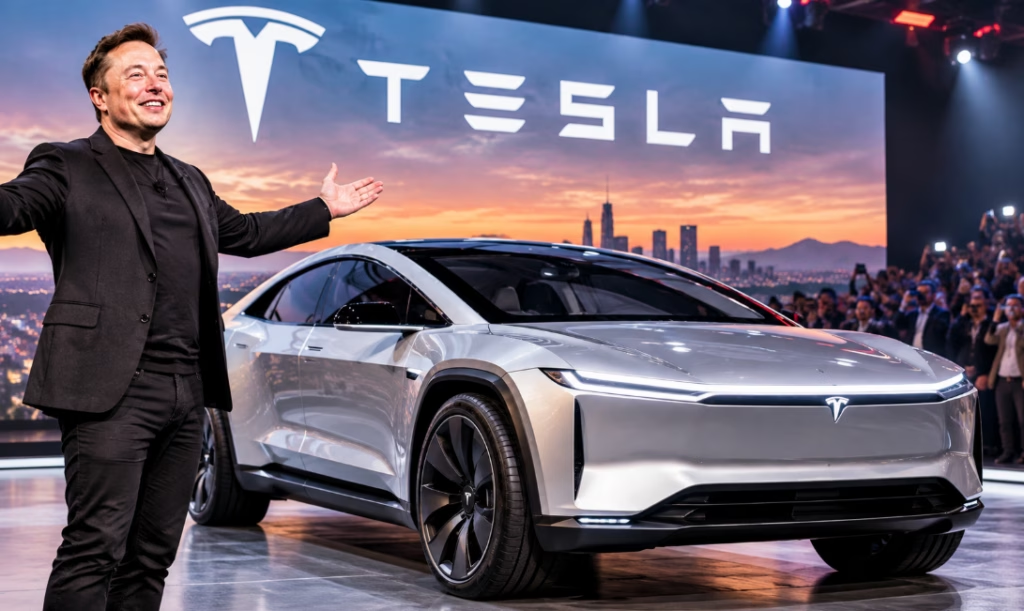
Tesla’s most provocative automotive vision is the Cybercab, a compact, purpose-built electric vehicle designed around the concept of autonomous transportation. Unlike conventional automobiles, the Cybercab concept dispenses with the familiar steering wheel and pedals, replacing the traditional driving experience with a passenger-focused interior. Its sleek, futuristic appearance and unconventional engineering reflect Musk’s conviction that the automobile of tomorrow may look very different from the family sedan parked in today’s driveway.
Musk introduced the Cybercab during Tesla’s October 2024 “We, Robot” presentation at Warner Bros. Studios in Burbank, California. The theatrical unveiling featured autonomous-vehicle demonstrations and offered a glimpse of the company’s long-term transportation ambitions. Musk described a future in which transportation could become significantly less expensive through automation. The presentation was visually impressive, but an important distinction remains: a carefully managed demonstration is not the same as proving that a driverless vehicle can operate safely under every condition encountered on public roads.
The Cybercab’s design is as much a statement of philosophy as an exercise in automotive styling. Its compact proportions, streamlined exterior, and passenger-oriented cabin emphasize the idea that cars should eventually become transportation appliances rather than machines requiring constant human attention. Removing traditional driver controls could create additional interior space and simplify certain aspects of manufacturing. However, it also raises difficult questions about emergency intervention, regulatory compliance, passenger safety, and how a vehicle should respond when its automated systems encounter unexpected circumstances.
Perhaps the most ambitious element of Musk’s strategy is Tesla’s reliance on artificial intelligence and camera-based perception. Tesla has argued that advanced visual processing can enable vehicles to understand their surroundings and make driving decisions. The company has invested heavily in neural networks, onboard computing, and the enormous volumes of driving data generated by its vehicles. Critics, however, question whether a camera-centered approach can consistently match the reliability required for fully autonomous operation, particularly during heavy rain, fog, unusual road conditions, or unpredictable human behavior.
Tesla’s existing Full Self-Driving software provides an important foundation for these ambitions, but its name has sometimes created confusion. The consumer version marketed as Full Self-Driving (Supervised) requires an attentive human driver who remains responsible for the vehicle. It is not equivalent to an unrestricted, driverless taxi service. The distinction matters because the transition from driver assistance to genuine autonomous operation involves far more than improving software performance. It requires extensive validation, operational safeguards, and compliance with applicable transportation regulations.
For consumers, the attraction of autonomous transportation is easy to understand. Imagine summoning a vehicle to your home, climbing aboard, and arriving at a restaurant, airport, or business meeting without touching a steering wheel. Older adults and people who cannot drive could potentially benefit enormously from reliable driverless transportation. Commuters might recover hours ordinarily spent concentrating on traffic. Yet these benefits depend on systems that are genuinely safe, accessible, affordable, and available in the communities where people need them.
Musk has also promoted the possibility of privately owned Tesla vehicles participating in a future autonomous transportation network. In theory, a vehicle could transport paying passengers while its owner is at work or asleep, transforming a depreciating automobile into a potential income-producing asset. It is an intriguing proposition, but one that should not be mistaken for an established financial opportunity. Insurance costs, vehicle maintenance, depreciation, local regulations, network fees, and the technical limitations of autonomous software would all influence whether such an arrangement could become practical or profitable.
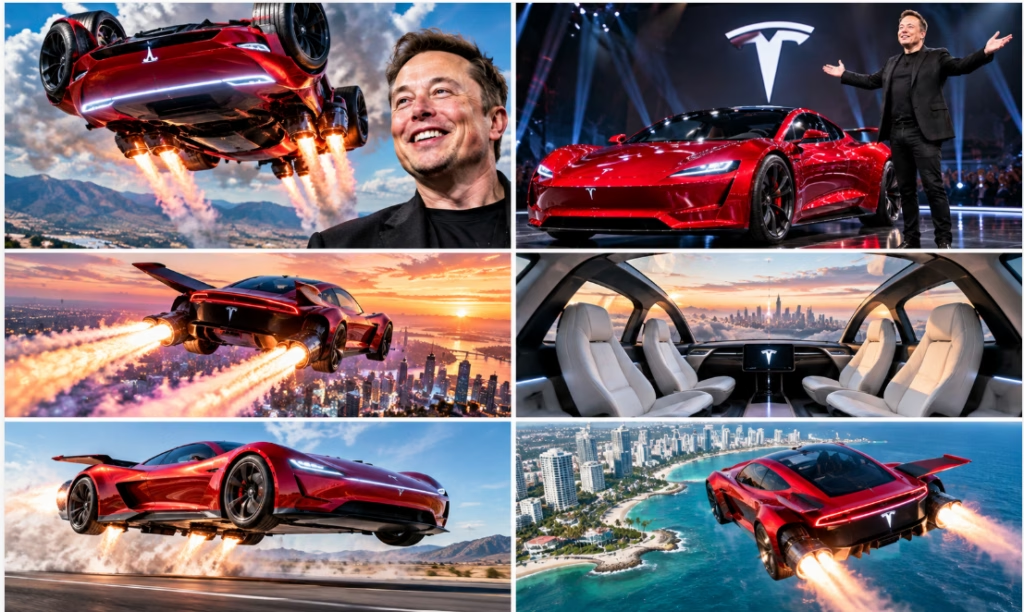
But Tesla’s latest surprise has taken the story in an entirely different direction. On October 15, 2026, Musk reportedly unveiled a redesigned second-generation Roadster at a SpaceX facility in Texas. This was no ordinary sports-car introduction. Reports described aerospace-inspired technology, including cold-gas thrusters and a system designed to generate powerful suction beneath the vehicle. Demonstrations reportedly included dramatic airborne maneuvers and upside-down driving, making the Roadster an extraordinary spectacle even by Musk’s standards.
The new Roadster’s reported performance figures are almost difficult to comprehend. Tesla reportedly claims the vehicle can accelerate from zero to 60 miles per hour in less than one second, while its projected top speed exceeds 230 miles per hour. The company has also discussed a range of approximately 300 miles per charge. These are reported manufacturer claims, not independently verified production-vehicle specifications. Nevertheless, the proposed combination of electric propulsion and rocket-inspired technology represents one of the most unusual approaches to automotive performance in recent memory.
The Roadster’s proposed ability to perform airborne maneuvers is particularly remarkable because it brings together technologies traditionally associated with two very different industries. SpaceX has spent years developing sophisticated propulsion systems, while Tesla has concentrated on electric motors, battery systems, and vehicle software. Musk’s latest vision attempts to combine elements of both worlds. However, a vehicle capable of briefly leaving the ground is not necessarily a practical flying automobile, and widespread use of such technology would raise substantial safety and regulatory questions.
Prospective buyers may also need considerable patience. Reports surrounding the latest Roadster presentation suggest that production is not expected until 2028. Reservation deposits have reportedly ranged from $50,000 to $250,000 for different versions, but a reservation is not a guarantee of delivery. Tesla has previously experienced lengthy delays between ambitious product announcements and commercial availability. For anyone considering such an expensive purchase, the distinction between an impressive prototype and a delivered automobile is especially important.
Meanwhile, Tesla’s established automotive business remains substantial. On October 2, the company reported producing 464,391 vehicles and delivering 486,532 during the third quarter of 2026. Those figures demonstrate that, despite the attention devoted to robots, autonomous taxis, and extraordinary sports cars, Tesla still depends heavily on selling conventional electric vehicles. Investors will receive another opportunity to evaluate the company’s financial position when Tesla reports third-quarter earnings on October 21.
Regulatory scrutiny remains another important part of the Tesla story. Federal authorities have examined allegations involving the behavior and safety of Tesla’s automated driving systems, while questions continue surrounding the capabilities of autonomous vehicles. Litigation concerning Tesla’s representations about self-driving technology has also highlighted the complicated balance between technological innovation, public safety, consumer expectations, and the legal responsibilities of automobile manufacturers. Allegations in such proceedings should not be confused with established findings of wrongdoing.
Ultimately, Elon Musk has once again accomplished something that few automotive executives can manage: he has made the world stop and stare at a car. Whether the extraordinary Roadster becomes a commercially successful automobile or remains a spectacular demonstration of engineering ambition will depend on what Tesla can actually manufacture, certify, and deliver. For now, the proposed vehicle has captured attention with the possibility of leaping into the air, turning conventional automotive expectations upside down, and generating headlines around the world. The future of transportation may still be uncertain, but one thing is clear: when Elon Musk promises to turn the automotive industry upside down, sometimes he means it quite literally.