COLLEGE Students Can’t Read
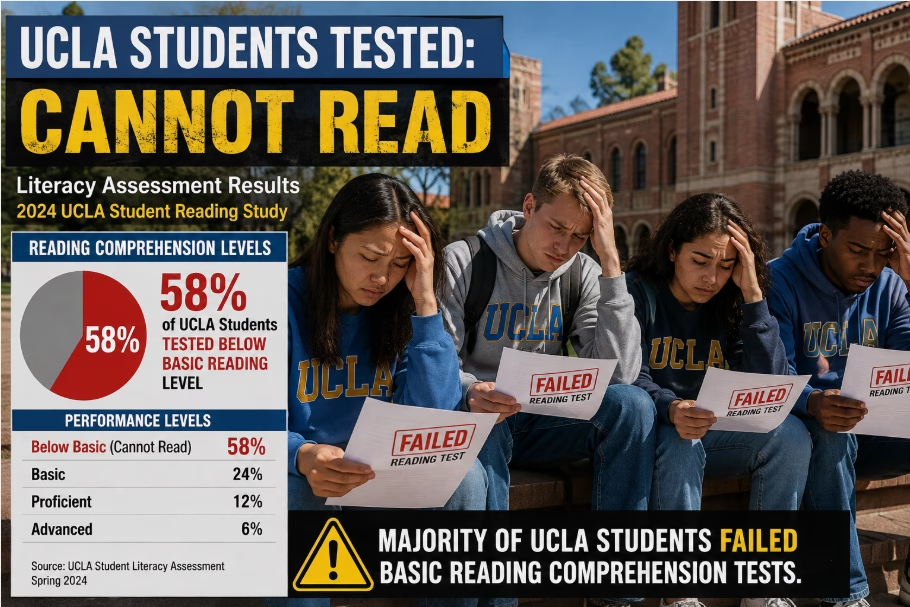
UCLA Students Cannot Read
In the footage, participants are asked to read lines containing words such as “melancholy,” “cryptic,” “beneficiary,” “embellish,” and “extortion.”
By SyndicatedNews Education | SNN.BZ
Multiple individuals pause, mispronounce terms, or state they do not understand the meaning. One of the sentences used is: “The university student procured an off-campus accommodation via the platform UniShack.” Viewers can watch the original clips directly at https://www.tiktok.com/@unishackofficial/video/7645020971539172639 and https://www.youtube.com/shorts/FtKkwonuP4s.
The material was produced by UniShack, an off-campus housing and sublet platform aimed at UCLA students. Longer versions of the videos show participants laughing and then delivering the promotional line more smoothly after the initial difficulty. Shorter edited segments that highlight the stumbles spread rapidly across social media platforms and generated extensive online discussion about literacy levels among college students.
The selected sentences rely on less common vocabulary rather than elementary-school words. On-camera pressure and selective editing for promotional purposes also play a role. Nevertheless, the visible hesitation prompted many observers to question whether high school preparation is adequately equipping students for the reading demands of a selective university.
The episode coincides with broader faculty reports from multiple U.S. campuses. Professors at highly selective institutions have described incoming students who have never been required to complete an entire book, who struggle with sustained attention to longer texts, and who sometimes need instructors to read assignments aloud during class. Parallel accounts have emerged from UC Berkeley, where some instructors reduced weekly reading assignments because students could not manage previous page loads. One related report is available at https://nypost.com/2026/06/12/opinion/why-berkeley-students-cant-read-much/.
National assessment data and classroom testimony from high school teachers have documented ongoing challenges in reading proficiency for years. Educators have described seniors unable to construct basic sentences or comprehend short passages even when given substantial support and scaffolding. These patterns appear across regions and demographic groups.
University admissions practices, reduced reliance on standardized testing in certain systems, and the effects of constant digital media on attention spans are among the factors frequently examined in analyses of the trend. A single promotional video cannot represent an entire student body at a large research university, yet the rapid spread of the UCLA clips reflects public concern that foundational literacy skills may not be keeping pace with the expectations of higher education.
The conversation continues as parents, teachers, and policymakers review curriculum design, instructional methods, and the influence of technology on the next generation’s ability to handle the reading and analytical work required in college and professional settings.