6.1 Earthquake Offshore Cuba, Felt In Southern Florida
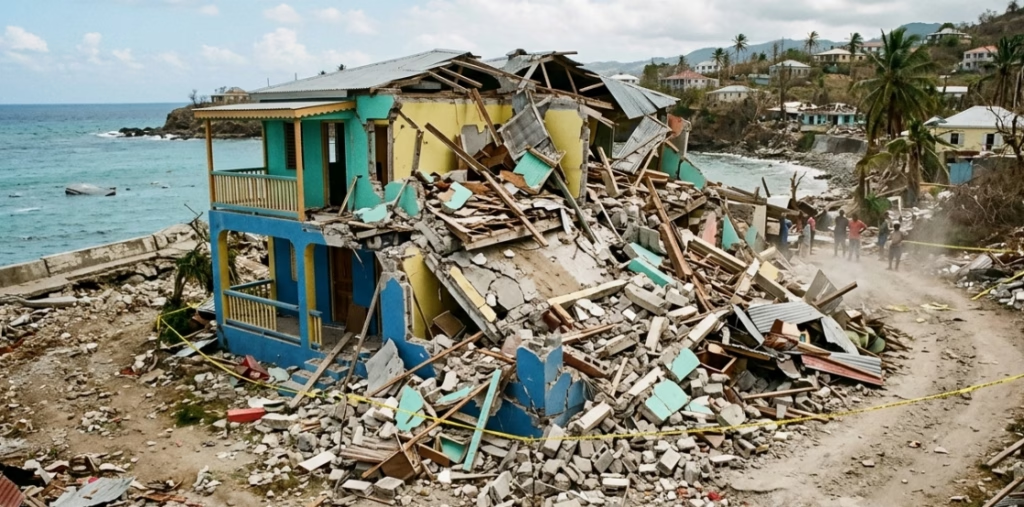
Two Earthquakes in Cuba
On Monday, June 8, 2026, a 6.1-magnitude earthquake struck off the western coast of Cuba, with its epicenter located approximately 65 miles (about 104 km) west-northwest of Mantua in Pinar del Río province. According to the United States Geological Survey (USGS), the quake occurred at around 2:00 p.m. EDT at a relatively shallow depth of roughly 10 to 26 kilometers.
By SyndicatedNews Earthquake | SNN.BZ
This seismic event, initially reported with preliminary magnitudes up to 6.4 before being refined, sent tremors through parts of Cuba and was widely felt hundreds of miles away in the United States.
Residents in Havana reported buildings shaking for about 20 seconds, prompting some evacuations from offices and high-rises as a precautionary measure. In western Cuba near the epicenter area, the quake was felt more strongly, though initial assessments indicated no significant structural damage or injuries on the island. Cuban authorities and international monitoring agencies continue to evaluate any potential impacts in more remote or vulnerable communities.
The earthquake’s effects extended well beyond Cuba’s borders. Across southern and central Florida, thousands of residents reported feeling light to moderate shaking, with reports coming in from the Florida Keys, Miami, Tampa, Orlando, and even as far north as Jacksonville. Theme parks including Universal Orlando noted the event, describing it as one of the more noticeable tremors in the region in recent years. Social media quickly filled with accounts of surprised Floridians describing rattling windows, swaying lights, and a brief sense of unease.
No tsunami threat was issued for the region by the National Weather Service or Pacific Tsunami Warning Center, as the quake’s characteristics did not warrant major concern for large waves. Officials emphasized that while the event was perceptible, it did not produce the conditions typically associated with destructive tsunamis in the Caribbean.
Cuba sits in a seismically active zone due to its position near the boundary between the North American and Caribbean tectonic plates. The region features several fault systems, including the Oriente fault zone in the east, though this particular event occurred in waters off the western part of the island. Moderate earthquakes are not uncommon, but significant damage is rare unless events are shallower or closer to population centers.
This quake ranks as one of the stronger events recorded in the Gulf of Mexico area in modern times, with some comparisons noting it as the largest in the stable Gulf region since the mid-20th century. Despite its magnitude, the USGS issued a green alert level, indicating a low likelihood of casualties or substantial economic losses, which aligned with early reports from the ground.
In the aftermath, emergency services in Cuba and Florida monitored for any aftershocks or secondary effects. Residents were advised to remain vigilant, secure heavy objects, and follow local safety guidelines for seismic activity. The event served as a reminder of the Caribbean’s underlying geological risks, even in areas not frequently hit by major quakes.
As investigations continue, this earthquake highlights the importance of preparedness in both Cuba and neighboring regions like Florida. Cross-border seismic monitoring and public awareness can help mitigate future impacts in this tectonically dynamic part of the world. No major disruptions to infrastructure or daily life have been reported so far, allowing authorities to focus on thorough assessments and community reassurance.