Transgender Killer Murders Mom Over Surgery Refusal
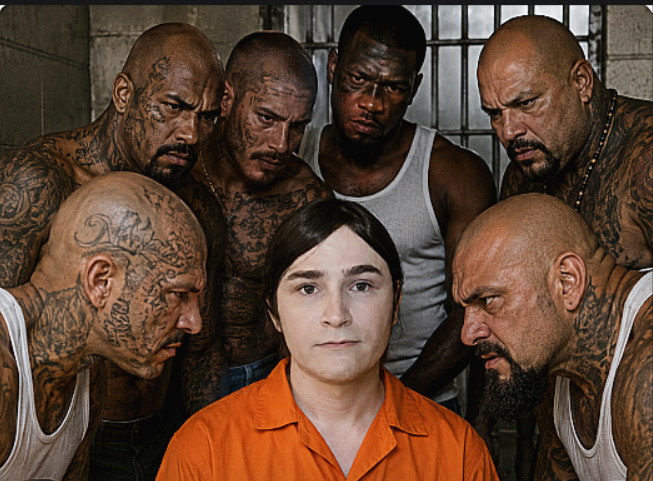
"Julia" Egler (Born Jasper Egler)killed his mother and her boyfriend over a transgender surgery cost dispute
It was a quiet evening in a suburban Palm Bay neighborhood when 16-year-old “Julia” Egler (Born Jasper Egler), Stood at the front door of the family home and calmly told arriving Brevard County Sheriff’s deputies that an intruder had broken in through the back door and attacked his mother and his mother’s boyfriend.
SyndicatedNews True Crime | SNN.BZ
What officers found inside told a different story — one of calculated rage, staged evidence, and a son pushed to the breaking point by years of conflict over his transgender identity and his mother’s new relationship.
The case, captured in chilling detail on police body-camera footage and later revealed through recorded interrogations, would unravel within hours. Julia, who identified as male and preferred he/him pronouns, was arrested and charged with two counts of first-degree murder. He was tried as an adult.
The 911 Call and the Scene That Didn’t Add Up
At approximately sunset on August 7, 2024, Julia dialed 911. His voice was steady as he reported that someone had smashed through the back door and shot his 38-year-old mother, Kelly McIlum, and Kelly’s 22-year-old boyfriend, Michael Shrenrock.
When deputies arrived, Julia was waiting at the front door. He claimed he had been hiding in his bedroom with his dogs when he heard gunshots and banging. He said he stayed hidden until it was quiet, then discovered the bodies.
Inside, the scene was gruesome. Kelly McIlum lay dead in the living room, shot multiple times. Michael Shrenrock was found in the bathroom — he had been shot in the torso and head and stabbed repeatedly. Blood trails led through the house. The back door had been smashed inward, but the damage was inconsistent with an outside intruder forcing entry. Glass and debris patterns suggested the door had been broken from inside the home.
Security cameras around the property showed no unknown person approaching or entering the house that evening. There were no signs of forced entry at any other point. Bloody footprints inside matched the size and pattern of shoes belonging to someone living in the house — specifically, footprints that appeared under broken glass rather than on top of it, indicating the glass was broken after the footprints were made.
A Boiling Point of Resentment
According to investigators, the murders stemmed from long-simmering tension that had reached a breaking point.
Julia had been in repeated, heated arguments with his mother over Julia’s gender identity. Kelly McIlum reportedly struggled to accept her son’s transition and continued to use she/her pronouns and his birth name in ways Julia found deeply invalidating. Julia also resented his mother’s relationship with Michael Shrenrock, who was only 22 — just six years older than Julia himself. He felt disrespected, sidelined, and trapped in what he described as a “prison” of a house.
That afternoon, after waking around 2 p.m., Julia and his mother had another argument, this time about Julia wanting to attend a party. The fight escalated. Police later determined Julia took his mother’s .38 Special revolver and a knife, then waited for Kelly and Michael to return home.
When they walked through the door, Julia reportedly greeted them with the words, “Welcome home,” before opening fire. He shot his mother multiple times in the living room. Michael fled toward the bathroom; Julia pursued him, shooting him in the torso and head, then stabbing him repeatedly as he pleaded for his life.
After the killings, Julia staged the scene: smashing the back door from the inside to simulate a break-in, spreading blood, and creating a narrative of a random intruder — possibly a Black male in dark clothing — who had slipped in around sunset.
He then called 911 and waited at the front door, cool and collected as deputies arrived.
Body-Cam Footage and the First Cracks
Body-camera footage from the responding officers captured every word. Julia stood in the driveway recounting his story with remarkable composure for someone who had supposedly just discovered their mother and her boyfriend slaughtered. When pressed gently, he slipped in a telling remark: “I should have told her I loved her.”
Detectives noted the calm demeanor, the inconsistencies in his timeline, and the fact that he seemed to know details about the house’s blind spots on the security cameras. They also observed bloody footprints that placed him in areas of the house he claimed he never entered during the attack.
Interrogations: From Denial to Confession
Julia was taken in for questioning. In the first formal interrogation, he stuck to his intruder story, describing how he hid with his dogs and only emerged later. He admitted he was familiar with firearms but insisted fear kept him hidden.
Detectives confronted him with the physical evidence: the door damaged from the inside, footprints under glass, the lack of any intruder on video, and blood-spatter patterns that suggested the shooter had moved freely through the house after the killings.
In the second interrogation, the pressure mounted. Detectives laid out the contradictions and appealed to any remorse Julia might feel. They discussed his frustration with being misgendered and his mother’s relationship. Eventually, Julia broke.
He confessed.
He admitted he had planned the attack, waited for his mother and Michael to come home, greeted them, and then shot and stabbed them. He described the sequence in detail, including how Michael had begged for his life in the bathroom before he finished him.
The confession was captured on video. Julia was charged with two counts of first-degree premeditated murder.
Legal Outcome
Because of his age, Julia was ineligible for the death penalty under Florida law even though he was tried as an adult. As of the latest reports from the investigation and court proceedings detailed in the documentary footage, he had not yet been sentenced at the time the full body-cam and interrogation videos were released.
The case sent shockwaves through the Palm Bay community and sparked broader conversations about family conflict, mental health, and the intersection of gender-identity struggles with domestic violence. It also highlighted the power of body-camera evidence and rapid forensic analysis in cracking what initially appeared to be a random home invasion.
The entire sequence — from the 911 call to the driveway interview, the two recorded interrogations, and the moment of confession — was preserved on video and later compiled into a detailed public documentary by the channel StayAwake – Crime & Interrogation. The footage leaves little to the imagination: every pause, every evasion, and every damning slip is there for viewers to see.
In the end, what began as a reported home invasion turned out to be a brutal family tragedy carried out by the one person police initially believed was the surviving victim.