Retirement Dreams Become Financial Nightmares

By Arthur Reed — Down the Middle
What began as an extraordinary retirement adventure aboard a luxury residential cruise ship has become a financial and personal crisis for hundreds of passengers, many of them senior citizens who invested substantial portions of their retirement savings in a permanent life at sea. The Villa Vie Odyssey, operated by Florida-based Villa Vie Residences, suspended operations in Cambodia on October 27, 2026. The latest development came November 1, when CBS News reported that a lender had taken possession of the vessel, leaving residents uncertain whether they would ever return to their floating homes. CBS News
The ship departed Belfast, Northern Ireland, in September 2024, promising residents an opportunity to travel continuously around the world while enjoying the comforts of a permanent residence. Unlike a conventional cruise, passengers could purchase long-term residency rights or participate in rental arrangements. Permanent cabin prices reportedly ranged from approximately $130,000 to $440,000, with additional monthly charges reaching thousands of dollars. For retirees seeking to combine housing, travel, meals, and entertainment into one lifestyle, the proposition offered an alternative to traditional retirement communities. Cruise Critic
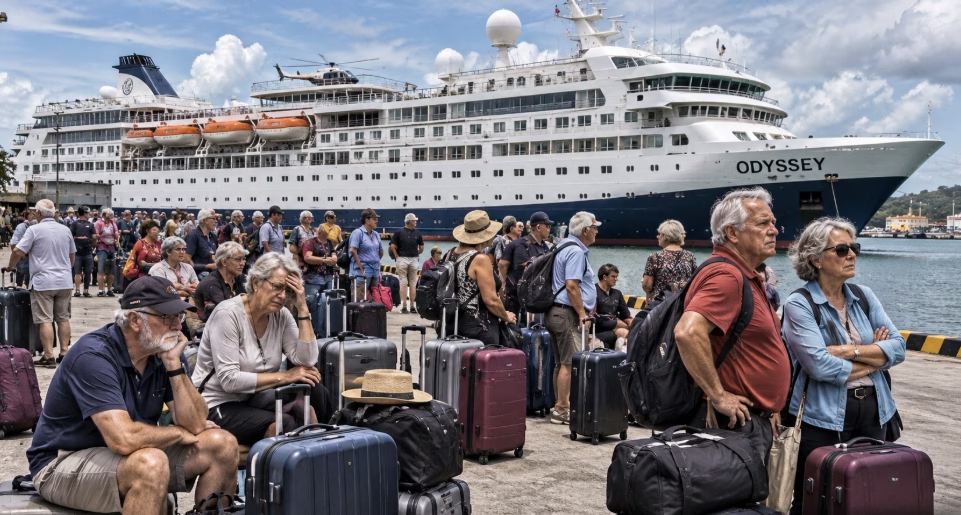
Among those affected were Americans Lynn and Paul Montoya, who sold their Wyoming home and vehicles to purchase a cabin aboard the ship for approximately $179,000. Their monthly expenses were reportedly about $6,000. After 17 months aboard, the couple found themselves in Cambodia, facing the unexpected termination of their retirement voyage. According to Reuters, approximately 200 other passengers were also instructed to disembark, taking their pets and whatever personal possessions they could carry. Their experience illustrates the financial vulnerability of residents who had converted substantial personal assets into the promise of long-term accommodation aboard a privately operated vessel. Investing.com
Villa Vie Residences attributed the suspension primarily to extraordinary increases in marine fuel expenses. In an official statement issued October 27, the Fort Lauderdale-based company reported that its monthly fuel costs, calculated on an equivalent per-cabin basis, had increased from approximately $1,800 to between $6,000 and $8,000 in certain Asian operating regions. Management stated that slowing the ship’s itinerary and extending port stays had failed to compensate for the increased expenses. The company acknowledged that its operating model had become financially unsustainable and announced plans to explore restructuring and new financing. PR Newswire
However, subsequent reporting raised questions about whether rising fuel costs alone explain the financial collapse. An investigation published by CBS News on October 30 examined internal company documents indicating that the ship had experienced serious financial difficulties for several months. According to those documents, the company owed substantial amounts to suppliers, fuel providers, port agents, and crew members. One financial presentation indicated projected monthly operating expenses of $3.1 million against potential revenue of $2.5 million, even at full occupancy. A source close to the company disputed those operating-expense figures. The conflicting accounts underscore the importance of independently examining the company’s finances before drawing conclusions about responsibility. CBS News
Passengers also described repeated requests for additional financial contributions. According to reporting by CBS News and other publications, some residents provided money to help purchase fuel and sustain operations. CBS reported that approximately $400,000 was paid directly to a fuel supplier from one resident’s personal checking account during an earlier financial emergency in Singapore. These reports raise important questions about the distinction between residents’ contractual obligations and voluntary payments intended to keep the vessel operating. Whether those contributions constitute recoverable loans, additional residency payments, or unsecured claims depends on the underlying agreements and applicable law. CBS News
The Villa Vie Odyssey sailed under the Bahamian flag and was registered in Nassau, The Bahamas. Its International Maritime Organization identification number is 9000699. The ship’s flag state is relevant to maritime oversight, although the legal rights of residents and creditors may also depend on their contracts and other applicable laws. Bahamas Government Gazette.
The financial difficulties also affected the ship’s employees. Reports described delayed crew wages, problems securing provisions, and a temporary detention of the vessel in Hong Kong over an unpaid fuel bill. CBS News reported that court records documented a payment of $167,844.48 to a fuel provider before the ship could proceed. Residents described collecting money to assist crew members, adding another dimension to the financial disruption. The experiences of passengers and employees suggest that the consequences extended well beyond the cancellation of a vacation itinerary. CBS News
For residents, the immediate crisis centered on housing and personal security. Many had purchased cabin rights with the expectation of remaining aboard for years. Some sold homes or reduced their possessions before joining the voyage. When operations stopped, passengers were forced to arrange alternative accommodations in Cambodia, while the future of their cabin investments remained unresolved. Residents disputed aspects of the company’s statements concerning assistance with hotel accommodations, and some reported receiving only hours to prepare for disembarkation. The interruption left individuals who had regarded the ship as their primary residence confronting unexpected transportation, lodging, and living expenses. CBS News
On November 1, the financial crisis entered a more serious phase. CBS News reported that the vessel’s lender had assumed control of the Odyssey. Residents were instructed to remove their possessions during the weekend before access to the ship became restricted. According to the report, the vessel was expected to move from Cambodia to Singapore, where a possible auction had been discussed. Company founder and executive chairman Mikael Petterson maintained that restructuring negotiations could continue and emphasized that no sale had been scheduled. The lender’s possession of the vessel does not, by itself, establish that residents have permanently lost their contractual rights or that the company has exhausted every possibility of recovery. CBS News
The latest developments also revealed an unsuccessful effort by residents to organize their own financial rescue. CBS News reported that 169 residents had pledged additional funding toward an effort to acquire the vessel, but the proposed transaction failed after financing was declined. Another resident, Joel Greiff of Naples, Florida, reportedly spent $350,000 on a cabin but occupied it for only 26 days before the shutdown. Cases such as these illustrate why the treatment of resident payments, contractual guarantees, and creditor priorities could become central issues in any restructuring or insolvency proceedings. CBS News
The company has discussed the possibility of seeking Chapter 11 bankruptcy protection in the United States. Such proceedings, if initiated, could provide a framework for restructuring debts and determining creditors’ rights. However, the legal position of individual residents would depend on their contracts, the structure of their purchases, any applicable security interests, and the jurisdiction governing the vessel and related transactions. A lender taking possession of a ship is not, standing alone, evidence of criminal wrongdoing, fraud, or a final determination that residents’ investments are unrecoverable. Those conclusions would require documentary evidence and, where applicable, judicial findings. CBS News
The collapse of the voyage highlights a broader consumer-protection issue involving residential travel businesses. Traditional homeowners generally acquire recognized property interests, while residents aboard privately operated ships may hold contractual rights subject to financing arrangements, maritime law, and the financial stability of the operating company. The difference becomes particularly consequential when residents invest retirement savings in a cabin they expect to occupy for years. Prospective buyers of similar arrangements may wish to examine whether their payments are secured, whether refunds are available, and what happens if the operator becomes insolvent or the vessel is repossessed.
For Villa Vie Odyssey residents, the immediate priorities are accommodation, access to personal belongings, and reliable information concerning the ship’s future. Longer-term concerns include the recovery of advance payments, the enforceability of residency agreements, and the possibility of compensation if promised services cannot be delivered. As of November 1, the company’s restructuring prospects remain uncertain, and the reported possibility of an auction in Singapore has not become a confirmed sale.
The Villa Vie Odyssey was marketed as an opportunity to exchange the responsibilities of maintaining a traditional home for a retirement spent exploring the world. For many passengers, that experience included visiting numerous countries and developing a close community aboard the ship. The abrupt suspension does not erase those experiences, but it has exposed the financial risks of tying one’s retirement housing to the continued operation of a single commercial vessel.
The central issue now is whether residents who invested their savings in the promise of a permanent home at sea will receive meaningful financial protection as the company’s future is determined.
Sources and Verification
The following sources provide additional reporting, financial information, and statements from the company.
1. CBS News — November 1, 2026
Creditor takes control of Villa Vie Odyssey; possible transfer to Singapore.
https://www.cbsnews.com/news/creditor-taken-control-forever-cruise-message-to-residents/
2. Reuters — October 29, 2026
American couple’s retirement disrupted after residential cruise operations suspended in Cambodia.
https://www.investing.com/news/general-news/us-couples-retirement-dream-in-ruins-after-residential-cruise-scrapped-in-cambodia-4982652
3. CBS News — October 30, 2026
Internal documents reveal financial difficulties and efforts to secure additional funding.
https://www.cbsnews.com/news/forever-cruise-odyssey-villa-vie-documents/
4. Villa Vie Residences — Official Company Statement, October 27, 2026
Announcement of suspended operations, extraordinary fuel costs, and proposed restructuring.
https://www.prnewswire.com/news-releases/villa-vie-residences-suspends-operations-in-cambodia-as-it-pursues-restructuring-and-recapitalization-302920622.html
5. Cruise Industry News — October 2026
Reporting on the company’s financial difficulties and proposed Chapter 11 filing.
https://cruiseindustrynews.com/cruise-news/2026/10/villa-vie-set-to-file-chapter-11-after-odyssey-residents-left-in-cambodia/
6. CBS News — October 28, 2026
Statements from management and passengers concerning suspended operations and potential bankruptcy.
https://www.cbsnews.com/news/mv-odyssey-luxury-never-ending-cruise-ends-fuel-costs/