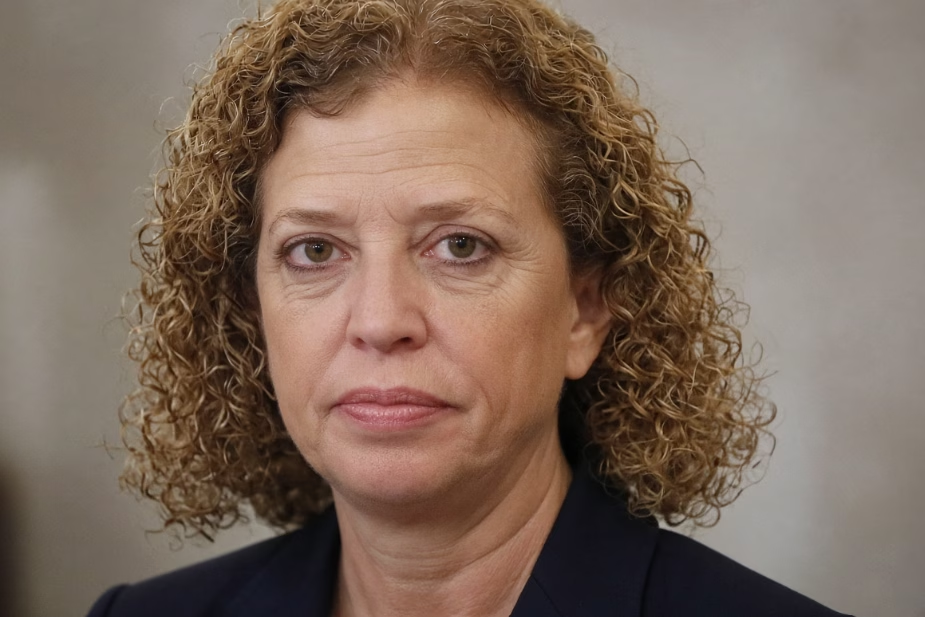
Debbie Wasserman Schultz (she’s back)
Early associations and fundraising (around 2012)
Wasserman Schultz’s record speaks for itself. She was scheduled as a keynote speaker for an EMERGE USA fundraising event. Critics (including Middle East Forum reports) highlighted the group’s ties to individuals previously linked to the Council on American-Islamic Relations (CAIR), which the U.S. government named an unindicted co-conspirator in the Holy Land Foundation terrorism-financing case involving Hamas support networks. The FBI had restricted formal outreach to CAIR. She canceled the appearance after public criticism; her office stated she had not formally agreed. Similar scrutiny arose later over Democratic outreach involving CAIR-linked figures and Florida Democratic Party-recognized Muslim caucuses. These associations were criticized by some as insufficiently cautious regarding groups with documented historical ties; defenders framed criticism a’ss Islamophobia.
DNC Chair tenure (2011–2016) and Clinton favoritism
Wasserman Schultz, a longtime Hillary Clinton ally who co-chaired Clinton’s 2008 presidential campaign, served as DNC chair. Critics within the party accused her of self-promotion (seeking personal fundraising and media attention at the expense of party building), aggressive rhetoric against Republicans, and uneven treatment of candidates.
In 2015, emails and texts reported by Politico indicated her staff offered major donor/medical-marijuana advocate John Morgan a potential shift in her opposition to a Florida medical-marijuana initiative if he retracted public criticisms of her. Morgan rejected it as a quid pro quo; Wasserman Schultz denied any such deal, calling the claim outrageous and attributing it to a misunderstanding. She had previously compared dispensaries to “pill mills.”
2016 WikiLeaks DNC emails and resignation
WikiLeaks released thousands of DNC emails showing staff (including interactions involving Wasserman Schultz) expressing clear preference for Hillary Clinton over Bernie Sanders during the primaries. Examples included dismissing Sanders’s viability, calling his campaign manager a “damn liar” and “ASS,” discussing ways to undermine Sanders (including questions about his faith in certain states), and internal coordination that Sanders supporters viewed as biased. The DNC was supposed to remain neutral. Wasserman Schultz resigned as DNC chair after the Democratic convention, stating she did not want to be a distraction. An FEC complaint alleged improper use of DNC resources for her own campaign; it was later recommended for dismissal on key counts. This cemented perceptions of her as a Clinton loyalist who tilted party machinery.
IT staff / Awan family (2016–2018)
Imran Awan and relatives worked as shared IT staff for numerous Democratic House offices, including Wasserman Schultz’s, for years (collectively receiving millions in payments). In early 2017, House security flagged them for investigation over equipment issues and network violations; most offices cut ties. Wasserman Schultz kept Awan on payroll longer, citing lack of evidence of wrongdoing and concerns about profiling. A laptop linked to her office was seized; she pressed for its return and invoked privileges, drawing ethics complaints.
Awan was arrested in July 2017 at an airport (en route related to Pakistan) on bank-fraud charges involving a home-equity loan and false statements about a property. Wasserman Schultz then fired him. He pleaded guilty in 2018 to making a false statement on the loan application (a relatively minor charge); other counts were dropped. Federal prosecutors explicitly stated after a thorough investigation (dozens of witnesses, forensic review of servers/devices) that they found no evidence Awan illegally removed House data, stole equipment in a criminal sense relevant to espionage claims, or improperly accessed/transferred sensitive/classified information. Conspiracy theories linking him to foreign intelligence or the DNC hack were publicly debunked by the Justice Department. Ethics complaints focused on her continued employment and compensation of someone barred from systems.
Financial disclosure / STOCK Act issues (2021 onward)
Wasserman Schultz has repeatedly filed late stock-trade disclosures under the STOCK Act (requiring reporting within 45 days). Documented late filings include:
- 2021: Late disclosure of Westell Technologies purchases (hers and a dependent child’s, totaling up to tens of thousands).
- Additional late filings in 2023 and 2024 involving family/dependent sales.
- 2024/2025: Purchase of New Gold Inc. stock (up to $15,000) disclosed more than 14 months late (OpenSecrets identified this as a fourth violation).
Late filings are common among members of both parties and typically draw modest fines (often waived); no public penalties specific to her have been highlighted as extraordinary. Watchdog groups filed ethics complaints over delayed financial disclosures.