Fat Chance? Turns Out Heavyweights Won
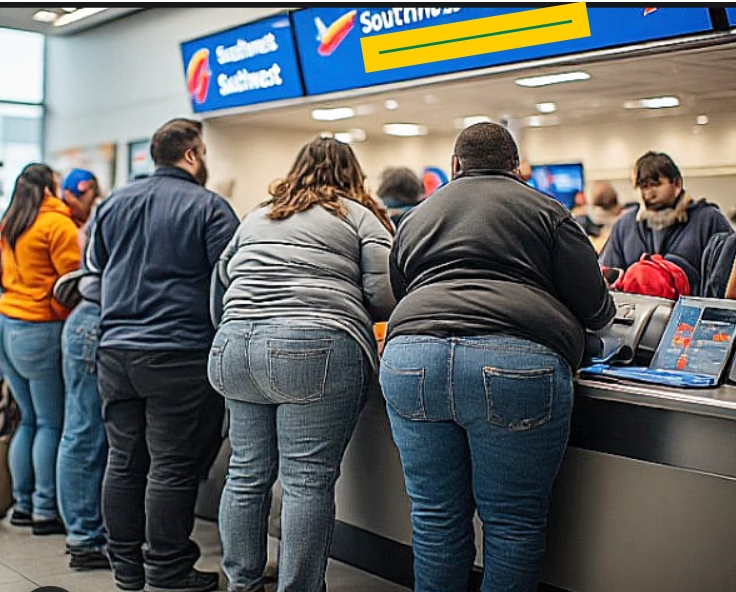
Southwest Airlines has retreated from its position of expecting heavyweight passengers to pay for 2 airline seats.
Southwest Heavyweight Passengers Found The “Pay For 2 Seats” Policy outright Offensive. The Airline Has Retreated And If There Is An Extra Seat Available – The Passenger Can Simply Have It.
By Ruthie DiTucci
Southwest Airlines Reverses Controversial Policy Requiring Some Overweight Passengers to Purchase Second Seats
In a significant reversal, Southwest Airlines has backed away from a controversial policy that would have required certain overweight passengers to purchase a second seat before boarding flights. The move comes after months of criticism from travelers, consumer advocates, and social media influencers who argued that the policy unfairly targeted plus-size Americans. Recent reports indicate that Southwest will once again provide an additional adjacent seat at no extra charge when space is available, rather than automatically requiring customers to buy a second ticket.
The original policy change, implemented earlier this year as part of Southwest’s transition away from open seating, required passengers who could not fit entirely within the confines of a single seat to purchase an extra seat in advance. Airline officials cited passenger comfort, safety, and fairness to neighboring travelers as reasons for the policy. Critics, however, quickly labeled the requirement a “fat tax,” arguing that it effectively penalized travelers based on body size.
Backlash intensified after multiple passengers publicly described embarrassing encounters with airline personnel. Several travelers claimed they were singled out at gates or during boarding, sometimes being required to purchase additional seating despite having previously flown without issue. Social media videos discussing these experiences attracted millions of views and generated widespread public debate over airline seating standards and passenger rights.
Under the revised policy, Southwest agents may provide an adjacent seat free of charge when available. Travelers who choose to purchase a second seat in advance may still be eligible for refunds under certain circumstances. If no extra seat is available on a particular flight, affected passengers may be rebooked onto a later departure. The airline says the goal is to create a more consistent and less confrontational experience for all customers.
The controversy also sparked discussions about potential legal challenges. While no major class-action lawsuit has yet produced a definitive court ruling against Southwest’s policy, legal observers noted that plaintiffs could potentially pursue claims alleging discrimination, unequal treatment, emotional distress, consumer protection violations, or violations of state anti-discrimination laws. The viability of such lawsuits would depend heavily on the specific facts of each case and the jurisdiction involved.
Advocates for plus-size travelers argued that the policy lacked objective standards and granted too much discretion to airline employees. Some passengers reported being judged based on appearance rather than actual seating measurements, creating concerns that similarly situated travelers could receive different treatment depending on the employee involved. Those concerns became a central focus of criticism as the policy faced growing scrutiny.
Supporters of the original rule countered that airlines must balance the needs of all passengers. They argued that travelers who require more than one seat inevitably affect neighboring passengers who paid for their own seating space. The debate highlighted the broader challenges facing airlines as seat sizes have generally become more compact while average passenger body sizes have increased over time.
For now, Southwest’s decision to retreat from the mandatory second-seat requirement appears to be an effort to calm the controversy and rebuild goodwill with customers. Whether the revised approach satisfies critics remains to be seen, but the airline’s latest move suggests that public pressure and customer backlash played a significant role in reshaping one of the most hotly debated airline policies of the year.