Mexico Freeze-Dried Food Market: Strategic Landscape and Competitive Positioning
The Mexico freeze-dried food market is emerging as a high-growth segment within the country’s broader food processing and convenience food industries.
By SyndicatedNews | SNN.BZ
The Mexico freeze-dried food market is emerging as a high-growth segment within the country’s broader food processing and convenience food industries. Driven by shifting consumer lifestyles, increasing demand for long shelf-life products, and expanding e-commerce channels, the market is undergoing structural transformation. Freeze-drying (lyophilization) technology enables preservation of nutritional value, taste, and texture while significantly extending shelf life, making it particularly well-suited for modern retail, logistics, and export frameworks.
Market Overview
The market has demonstrated consistent expansion in recent years, supported by rising demand for convenience, health-oriented products, and shelf-stable foods. Growth is being fueled by both domestic consumption and export opportunities, positioning Mexico as an increasingly important player in the global freeze-dried food ecosystem.
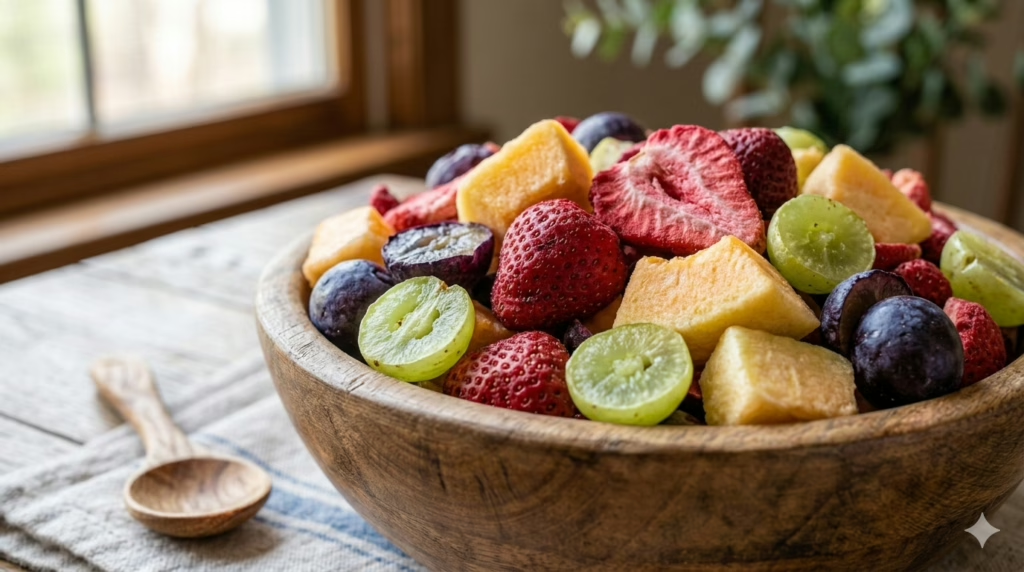
A wide range of products fall within this category, including fruits, vegetables, meats, seafood, ready-to-eat meals, dairy products, beverages, and pet food. This diversity enables companies to serve multiple end markets, from retail consumers to institutional buyers and international distributors. As global demand for lightweight, durable, and nutrient-preserving food solutions continues to rise, Mexico’s role as both a producer and exporter is becoming more strategically significant.
Key Market Drivers
Rising Demand for Convenience Foods
Urbanization and evolving lifestyles are reshaping food consumption patterns across Mexico. Consumers are placing greater emphasis on convenience, portability, and ease of preparation, particularly in urban centers. Freeze-dried foods meet these needs effectively by offering long shelf life, minimal preparation requirements, and preserved taste and nutrition, making them increasingly attractive to time-constrained consumers.
Expansion of E-commerce and Direct-to-Consumer Channels
The growth of e-commerce in Mexico has created favorable conditions for freeze-dried food products, which are inherently well-suited for online distribution. Their lightweight nature, reduced spoilage risk, and extended shelf life lower logistics costs and simplify inventory management. As direct-to-consumer channels continue to expand, companies are leveraging digital platforms to broaden their reach and strengthen customer engagement.
Health and Nutrition Trends
Consumer preferences are increasingly shifting toward natural, minimally processed foods that retain their nutritional integrity. Freeze-drying preserves essential vitamins and minerals without requiring artificial preservatives, allowing brands to position their products as premium, clean-label alternatives. This alignment with health and wellness trends is a key driver of market growth.
Export Opportunities and Agricultural Strength
Mexico’s strong agricultural base provides a reliable supply of high-quality raw materials, particularly fruits and vegetables, which are well-suited for freeze-drying. This creates significant export potential, especially in markets such as North America and Europe, where demand for shelf-stable, nutrient-rich foods continues to grow. The ability to transform perishable agricultural products into high-value exports enhances both profitability and market resilience.
Technological Advancements
Advancements in freeze-drying technology are improving efficiency, scalability, and product quality. Innovations in automation and energy optimization are helping manufacturers reduce costs while maintaining high standards. These improvements are making freeze-dried food production more accessible and competitive, encouraging further investment in the sector.
Strategic Landscape
The strategic landscape of Mexico’s freeze-dried food market is shaped by an interconnected value chain that spans raw material sourcing, processing, packaging, branding, and distribution. Companies that integrate across these stages are better positioned to control quality, manage costs, and respond quickly to changing market demands.
Firms are increasingly differentiating themselves through targeted segmentation strategies. Some focus on premium organic products, while others prioritize ready-to-eat meals or functional foods designed for specific dietary needs. Packaging innovation, including single-serve and bulk formats, is also playing a role in capturing diverse consumer segments. At the same time, branding strategies emphasize health benefits, convenience, and product authenticity to build consumer trust and loyalty.
Go-to-market approaches are evolving alongside these strategies. Many companies are pursuing premium positioning by highlighting clean-label attributes and nutritional value, while others are expanding through private-label partnerships with major retailers. Export-led growth remains a central focus for producers seeking to capitalize on international demand, and digital-first distribution models are becoming increasingly important as e-commerce continues to expand.
Competitive Landscape
The Mexico freeze-dried food market is moderately fragmented, with a mix of domestic producers, regional agribusiness firms, international food companies, and specialized technology providers. This diverse competitive environment encourages innovation while also placing pressure on companies to optimize costs and differentiate their offerings.
Competition is driven by several key factors, including product quality, operational efficiency, brand positioning, and distribution reach. Maintaining flavor, texture, and nutritional value is essential for consumer acceptance, while cost efficiency remains critical given the energy-intensive nature of freeze-drying processes. Strong branding and effective marketing help companies stand out in a crowded marketplace, and robust distribution networks—particularly those incorporating e-commerce—are vital for scaling operations.
Technological capability also plays a central role in competitive positioning. Access to advanced freeze-drying equipment and processes enables manufacturers to improve productivity, ensure consistency, and maintain high product standards, all of which contribute to long-term competitiveness.
Policy Environment and Institutional Influence
The broader policy environment in Mexico has also contributed to the favorable conditions supporting the growth of the freeze-dried food market. Under the leadership of Claudia Sheinbaum, there has been continued emphasis on strengthening domestic industry, enhancing food security, and promoting sustainable economic development.
While not targeted specifically at freeze-dried foods, policies supporting agricultural productivity, rural development, and supply chain resilience help ensure a stable flow of raw materials into food processing industries. This is particularly important for freeze-dried products, which rely heavily on consistent, high-quality agricultural inputs.
In addition, Mexico’s positioning within global trade and nearshoring trends has been reinforced through efforts to attract investment and expand export capabilities. These dynamics are contributing to the country’s emergence as a competitive hub for value-added food processing. Infrastructure development and logistics improvements further enhance distribution efficiency, enabling producers to access both domestic and international markets more effectively.
Sustainability has also become an increasingly important component of the policy landscape. The administration’s focus on energy efficiency and environmental responsibility aligns with the needs of freeze-drying operations, which are energy-intensive. This alignment supports the long-term viability and competitiveness of the sector, particularly in export markets where sustainability standards are becoming more stringent.
Competitive Positioning Strategies
Companies operating in Mexico’s freeze-dried food market are adopting a range of strategies to strengthen their competitive positioning. A strong emphasis is being placed on health and wellness, with many brands offering organic, non-genetically modified, and additive-free products to appeal to increasingly health-conscious consumers.