U.S. Ski Resorts – Projected Closing Dates (2026 Season)
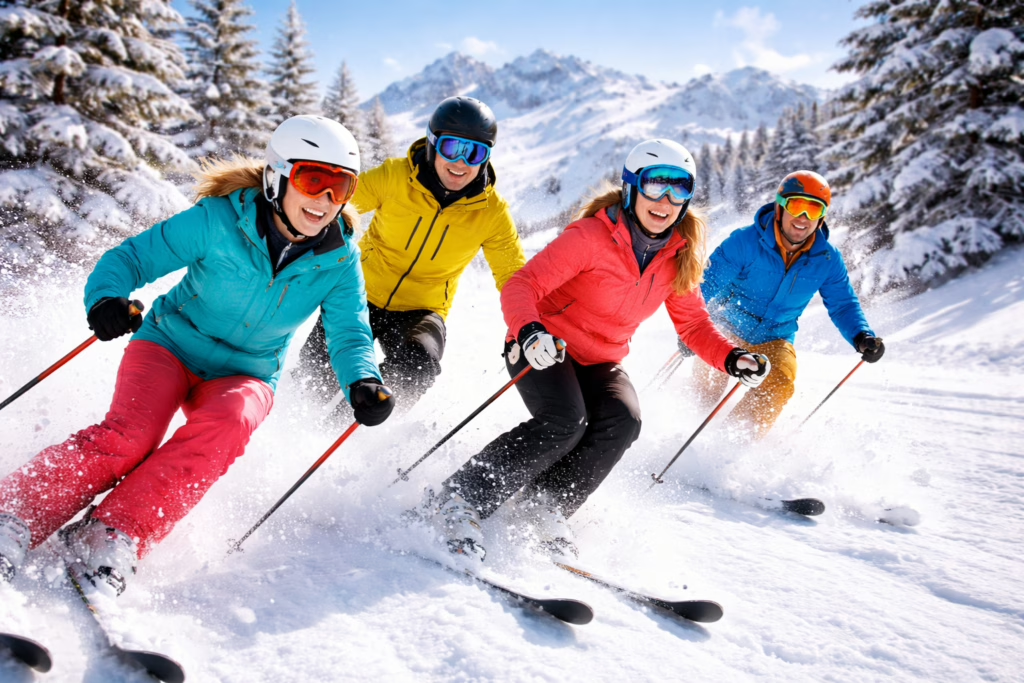
U.S. Ski Resorts Closing Early as Warm Weather Cuts Season Short
By SyndicatedSports | SNN.BZ
As winter loosens its grip across the United States, ski resorts from the Rockies to New England are rapidly shutting down for the 2025–2026 season. While seasonal closures are expected every year, this season is standing out because many resorts are closing earlier than usual. That shift is raising deeper questions about climate patterns, economic pressures, and what ultimately becomes of the vast mountain landscapes these resorts occupy.
❄️ Why Ski Resorts Are Closing Earlier
Unseasonably warm temperatures have played a major role in shortening the ski season. In many regions, especially in the western United States, higher-than-average temperatures have reduced the snowpack and caused existing snow to melt faster than normal. Areas that typically enjoy extended seasons into late spring are instead seeing conditions deteriorate weeks ahead of schedule.
At the same time, snowfall has become far less predictable. Instead of consistent, gradual accumulation, many resorts have experienced erratic weather patterns that include heavy snowstorms followed by rain or prolonged dry periods during what should be peak winter months. These fluctuations make it extremely difficult for resorts to maintain safe and reliable skiing conditions.
Financial pressures are also contributing to early closures. Operating a ski resort requires significant investment in snowmaking, grooming, staffing, and infrastructure. When natural snow is insufficient, resorts must rely more heavily on artificial snow production, which is costly and energy-intensive. As visitor numbers drop due to poor conditions, revenue declines while expenses rise, forcing many operators—particularly smaller resorts—to close earlier than planned.
🏔️ The Bigger Question: What Happens to All That Land?
The idea that ski resorts could easily be transformed into housing developments or urban centers is a common misconception. While ski resorts collectively cover millions of acres, much of that land is not privately owned. In fact, a significant portion is federally managed by agencies such as the U.S. Forest Service.
Resorts operating on federal land do so under special-use permits, which allow recreational activities like skiing but strictly limit permanent development. These regulations are designed to preserve natural landscapes and prevent overdevelopment. As a result, even if a resort shuts down, the land typically cannot be repurposed for large-scale construction projects.
🏘️ Could Ski Resorts Become Housing?
There is some potential for limited housing development, but it is generally confined to areas that have already been built up, such as base villages and existing resort infrastructure. In well-known resort communities like Aspen and Park City, developers have expanded residential options by adding condominiums, workforce housing, and mixed-use buildings.
However, even these modest expansions face significant challenges. Developers must navigate strict environmental regulations, local zoning laws, and, in many cases, resistance from residents who want to preserve the character of their communities. This means that while some additional housing may be built, it will occur gradually and on a relatively small scale rather than transforming entire mountain regions.
🏥 Schools, Hospitals, and Urban Development
The idea of converting ski resort land into large-scale infrastructure such as schools, hospitals, or full urban developments is highly impractical. Mountain environments present unique challenges that make this type of transformation unlikely. These areas are often remote, with limited access to major transportation routes and essential utilities like water, electricity, and sewage systems.
In addition, the terrain itself can be difficult to build on, and harsh winter weather conditions would complicate year-round operations for critical services. Combined with federal land protections and environmental concerns, these factors make large-scale civic development in ski resort areas extremely rare.
🌲 The Real Future: Year-Round Recreation
Rather than disappearing, many ski resorts are adapting by transforming into year-round destinations. This shift allows them to remain economically viable even as winter seasons become shorter and less predictable. Resorts are increasingly investing in activities such as mountain biking, hiking, scenic gondola rides, and outdoor festivals to attract visitors throughout the year.
This four-season model not only helps stabilize revenue but also broadens the appeal of these destinations beyond traditional winter sports enthusiasts. As a result, many resorts are evolving into versatile outdoor recreation hubs that can thrive in a changing climate.
🌿 Conservation and Land Restoration
In cases where ski resorts close permanently, the land is often returned to its natural state. Environmental organizations and government agencies may step in to restore ecosystems, protect wildlife habitats, and ensure that the land remains preserved for future generations. This process, sometimes referred to as rewilding, allows forests and alpine environments to recover and flourish without human intervention.
⚡ The Bottom Line
The early closure of ski resorts this season does not signal the end of the industry, but rather a period of transition. Climate variability and rising costs are forcing operators to rethink how they use their land and generate revenue.
While the vast acreage associated with ski resorts may seem like an opportunity for large-scale development, the reality is far more constrained. These lands are unlikely to become sprawling housing projects or urban centers. Instead, they will continue to serve as recreational spaces, natural preserves, and, in many cases, year-round destinations that reflect a new vision for outdoor tourism.
🧭 A Turning Point for the Industry
The future of skiing in the United States is no longer defined solely by winter. As environmental and economic conditions evolve, so too must the industry. The mountains themselves remain unchanged, but how they are used is shifting in response to a rapidly changing world.
U.S. Ski Resorts – Projected Closing Dates (2026 Season)
| Resort Name | State | Projected Closing Date | Base Depth | Conditions | Trails Open |
|---|---|---|---|---|---|
| Afton Alps | Minnesota | March 22, 2026 | 24″ | Variable | 26/33 (79%) |
| Andes Tower Hills | Minnesota | March 22, 2026 | 10–30″ | Machine Groomed | 0/16 |
| Angel Fire Resort | New Mexico | March 22, 2026 | 16–18″ | Machine Groomed | 14/95 (15%) |
| Big Moose Mountain | Maine | March 22, 2026 | 20″ | — | — |
| Big Powderhorn Mountain | Michigan | March 22, 2026 | 75″ | Packed Powder | 44/44 (100%) |
| Bousquet Ski Area | Massachusetts | March 22, 2026 | 30″ | — | — |
📌 All dates are projected and subject to change depending on snow conditions.
⚠️ Early Closures
| Resort | Location | Actual Closing | Reason |
|---|---|---|---|
| Homewood Mountain Resort | California | March 17, 2026 | Warm weather / no snow |
| Sierra-at-Tahoe | California | Mid-March 2026 | Rapid snow melt |
| Mt. Shasta Ski Park | California | Early March 2026 | Lack of snow |
| Dodge Ridge | California | Early March 2026 | Warm temperatures |