Former Cop Kills Friend Over Cash
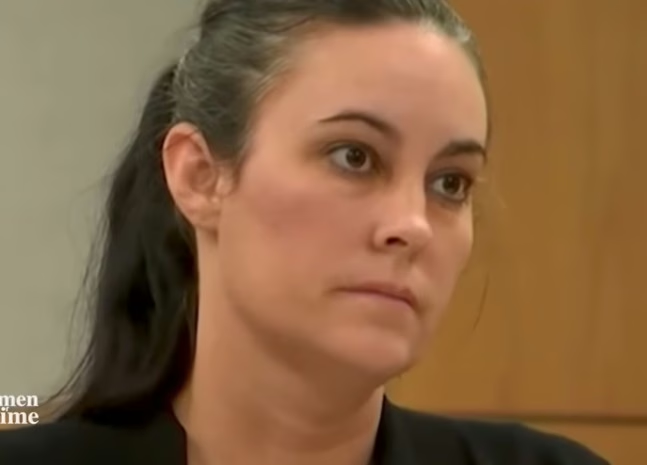
Ashley McArthur
SyndicatedNews | SNN.BZ
Pensacola, Florida — In a tale that reads like a twisted episode of a crime drama, Ashley McArthur, once a respected crime scene technician for the Oklahoma City Police Department, was unmasked as the architect of her close friend Taylor Wright’s brutal murder. The motive? A staggering $34,000 cash debt that McArthur callously squandered, leading to a premeditated killing in 2017 that shocked the quiet beaches of Pensacola, Florida. Convicted of first-degree murder in 2019, McArthur was sentenced to life in prison with a mandatory minimum of 25 years—a punishment that reflects the depth of her betrayal and the finality of justice served.
A Friendship Forged in Adversity
Taylor Wright was a rising star in the world of private investigation. At just 33 years old, the Nashville native had relocated to Pensacola after a painful divorce, seeking a fresh start. Athletic, charismatic, and fiercely independent, Wright quickly built a network of friends in her new home, including Ashley McArthur. The two women bonded over shared experiences—both had navigated the highs and lows of law enforcement-adjacent careers. McArthur, 40 at the time, had left her role as a forensic specialist in Oklahoma and was working odd jobs in Florida while dealing with her own marital woes.
Their friendship deepened when Wright decided to sell her home in Tennessee and stash the proceeds—$34,000 in cash—for safekeeping during her divorce settlement. Trusting McArthur implicitly, Wright handed over the money with a simple request: hold it until she needed it. “She’s my best friend,” Wright reportedly told others, a sentiment that would soon prove tragically misplaced.
But McArthur had other plans. Instead of safeguarding the funds, she blew through the cash on luxuries: a new camper, a motorcycle, and high-end jewelry. When Wright began pressing for the money back in September 2017, tensions escalated. McArthur’s excuses grew thinner, and Wright’s frustration mounted. Unbeknownst to her, McArthur was already plotting a permanent solution to her financial woes.
The Disappearance and the Grim Discovery
On September 8, 2017, Wright vanished without a trace. She had texted her ex-husband that morning about finalizing their divorce and mentioned plans to retrieve her money from McArthur. Friends and family grew alarmed when she missed appointments and failed to show up for work. A missing persons report was filed, triggering a frantic search.
McArthur played the part of the concerned friend flawlessly at first, even joining volunteers in the hunt for Wright. But cracks in her facade soon appeared. Investigators noted inconsistencies in her story: she claimed Wright had shown up at her home distraught, armed with a gun, and that they had argued before Wright stormed off. Yet, surveillance footage and phone records painted a darker picture—Wright’s last known movements led straight to McArthur’s property.
The breakthrough came on October 20, 2017, when Wright’s body was unearthed in a shallow grave on a rural plot of land owned by McArthur’s family, just outside Pensacola. She had been shot once in the back of the head with a .40-caliber handgun. The execution-style killing screamed premeditation, and forensic evidence— including soil samples matching the burial site to McArthur’s truck—sealed the connection.
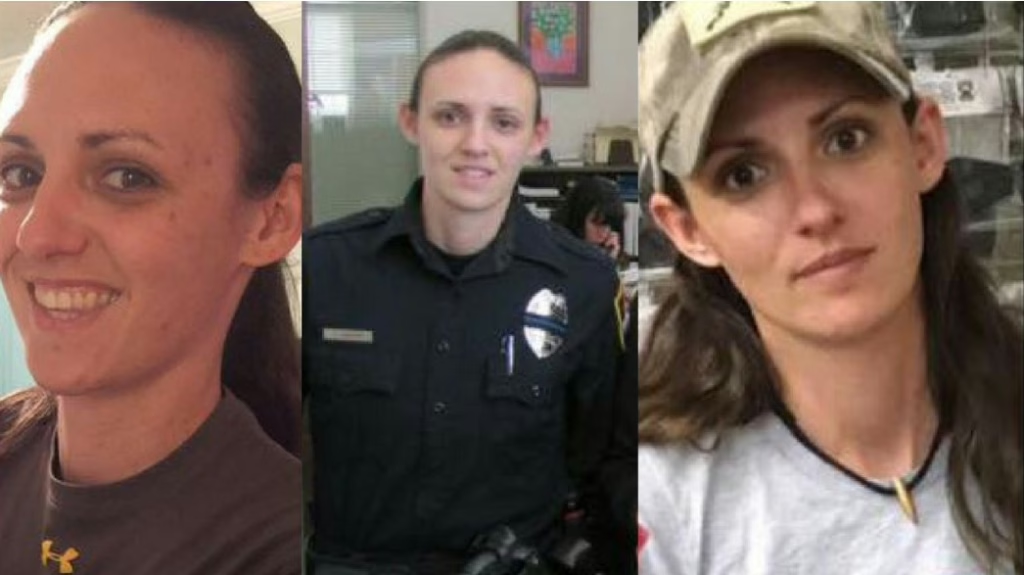
Unraveling the Web of Deceit
As the Escambia County Sheriff’s Office dug deeper, McArthur’s double life unraveled. Searches of her home revealed spent shell casings from the murder weapon and traces of blood that prosecutors would later link to Wright. Financial records confirmed the missing $34,000 had vanished into McArthur’s lavish spending spree. But the betrayal extended beyond murder; McArthur faced separate charges of racketeering and money laundering tied to insurance fraud schemes she had orchestrated while working as a forensic tech.
In February 2019, before her murder trial even began, McArthur was sentenced to seven years in prison for those fraud convictions—a harbinger of the justice to come. Undeterred, she maintained her innocence, claiming self-defense and accusing Wright of aggression. Her defense team argued the evidence was circumstantial, but the prosecution painted a chilling portrait of a woman who used her crime-solving expertise to cover her tracks.
The trial, which captivated local media and true-crime enthusiasts alike, unfolded in August 2019 in Escambia County Circuit Court. Witnesses, including Wright’s ex-husband and McArthur’s own family members, testified to the mounting debt and McArthur’s evasive behavior. After just hours of deliberation, the jury returned a unanimous guilty verdict on first-degree premeditated murder.
Life Behind Bars: Sentence and Appeals
Judge John F. Simon Jr. wasted no time in delivering the sentence: life imprisonment, with no possibility of parole for at least 25 years, the mandatory minimum under Florida law for capital murder convictions. “You took away a vibrant, beautiful young woman who had so much to give,” the judge remarked, echoing the sentiments of Wright’s grieving family.
McArthur, now 48, appealed the conviction, citing issues with suppressed statements and evidentiary rulings. But in April 2021, the Florida First District Court of Appeal unanimously upheld the verdict and sentence, closing the door on her bid for freedom. Today, she remains incarcerated at Lowell Correctional Institution in Ocala, Florida, serving out her days far from the forensic labs and friendships she once knew.

A Lasting Legacy of Caution
The Ashley McArthur case serves as a stark reminder of how thin the line can be between trust and treachery. For those left behind—Wright’s young son, her colleagues, and a community still reeling from the loss—the wound may never fully heal. As one prosecutor put it during closing arguments, “Greed doesn’t just destroy finances; it destroys lives.”
In the years since, the story has inspired episodes of shows like Dateline and Snapped, keeping Wright’s memory alive while underscoring the dangers of unchecked desperation. As McArthur fades into the anonymity of prison life, her victim’s light continues to shine—a testament to resilience amid unimaginable betrayal.